

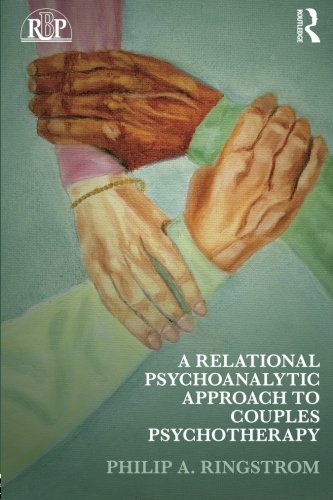
A Relational Psychoanalytic Approach to Couples Psychotherapy 1st Edition by Philip A Ringstrom ISBN 0415889251 9780415889254

Original price was: $50.00.$35.00Current price is: $35.00.
A Relational Psychoanalytic Approach to Couples Psychotherapy 1st Edition by Philip A. Ringstrom – Ebook PDF Instant Download/Delivery: 0415889251, 9780415889254
Full download A Relational Psychoanalytic Approach to Couples Psychotherapy 1st Edition after payment
Product details:
ISBN 10: 0415889251
ISBN 13: 9780415889254
Author: Philip A. Ringstrom
Winner of the 2014 Goethe Award for Psychoanalytic and Psychodynamic Scholarship!
A Relational Psychoanalytic Approach to Couples Psychotherapy presents an original model of couples treatment integrating ideas from a host of authors in relational psychoanalysis. It also includes other psychoanalytic traditions as well as ideas from other social sciences. This book addresses a vacuum in contemporary psychoanalysis devoid of a comprehensively relational way to think about the practice of psychoanalytically oriented couples treatment.
In this book,Philip Ringstrom sets out a theory of practice that is based on three broad themes:
The actualization of self experience in an intimate relationship
The partners’ capacity for mutual recognition versus mutual negation
The relationship having a mind of its own
Based on these three themes, Ringstrom’s model of treatment is articulated in six non-linear, non-hierarchical steps that wed theory with practice – each powerfully illustrated with case material. These steps initially address the therapist’s attunement to the partners’ disparate subjectivities including the critical importance of each one’s perspective on the “reality” they co-habit.Their perspectives are fleshed out through the exploration of their developmental histories with focus on factors of gender and culture and more. Out of this arises the examination of how conflictual pasts manifest in dissociated self-states, the illumination of which lends to the enrichment of self-actualization, the facilitation of mutual recognition, and the capacity to more genuinely renegotiate their relationship. The book concludes with a chapter that illustrates one couple treated through all six steps and a chapter on frequently asked questions (“FAQ’s”) derived from over thirty years of practice, teaching, supervision and presentations during the course of this books development.
A Relational Psychoanalytic Approach to Couples Psychotherapy balances a great range of ways to work with couples, while also providing the means to authentically negotiate their differences in a way which is insightful and invaluable. This book is for practitioners of couples therapy and psychoanalytic practitioners. It is also aimed at undergraduate, graduates, and postgraduate students in the fields of psychiatry, psychology, marriage and family therapy, and social work.
Table of contents:
1. Theoretical Overview
-
The actualization of the self in the context of an intimate relationship
-
The mutual recognition of each partner’s subjectivity
-
The relationship having a mind of its own
-
Can love last?
-
Meta-theoretical framework: complexity theory and improvisation
-
Notes
2. Step One
-
Organizing principles
-
Bidimensional transference
-
Vicious circles
-
Tom and Jane
-
Handling disappointments: attunement to the secondary selfobject function
-
Helena and Theo
-
Agency
-
Mutual recognition
-
Tim and Valerie
-
The relationship having a mind of its own
-
Multiple self-states
-
Listening stances
-
Claire and Simon
-
Summary
-
Notes
3. Step Two
-
“Truth as correspondence to facts” versus “truth as possible understanding”: making the case for both/and
-
Harold and Pauline
-
Discordant levels of discourse: the “doer” and the “done-to” versus what the partners mean
-
Fostering curiosity
-
Countertransference reactions: the collapse of the therapist’s perspective
-
Sally and Dan
-
Kevin and Stacy
-
Tony and Margaret
-
Summary
-
Notes
4. Step Three
-
History-taking
-
Key areas of developmental concern
-
Kurt and Kathy
-
Discerning implicit versus explicit communication
-
Affect regulation and tolerance
-
Todd and Angela
-
The importance of trauma, along with the risk of it turning into a “morality gambit”
-
The organizing functions of culture and gender
-
“Loyalty gambits” and their corrosive effects on self-actualization, mutual recognition, and the relationship having a mind of its own
-
Multigenerational transmission processes
-
The impact of immigration on long-term intimate relationships
-
Summary
-
Notes
5. Step Four
-
Adam and Eloise
-
Perversion of agency
-
Caren and Joe
-
Dissociative processes
-
Bob and Debbie
-
Improvisational responses to mutual inductive identification
-
Summary
-
Notes
6. Step Five
-
Self-reflexivity
-
Ray and Gladys
-
Josh and the subject/object distinction
-
More on self-reflexivity
-
Helen and Jerry
-
Nicole and Russell (Part One)
-
Discerning multiple self-states and beginning collaboration and negotiation from within
-
Fiona and Sam
-
Dialectics implicated in the formation of multiple self-states
-
Paradox
-
Donna and Herb
-
Negotiation
-
John and Mary
-
Summary
-
Notes
7. Step Six
-
Thirdness
-
The one-in-the-third
-
The role of sexual perversion in relationships
-
Rob and Donna
-
Bill and Desirée
-
The third-in-the-one
-
From dialectics of difference to thirdness
-
Courtney and Ken
-
Intersubjective collaboration and negotiation
-
Nicole and Russell (Part Two)
-
Paradox and surrender
-
Nicole and Russell (Part Three)
-
The partnership function of bearing witness
-
Larry and Sharrie
-
Samantha and Randall
-
Allen and Shelby
-
The capacity to terminate
-
Phil and Syria
-
Summary
-
Notes
8. Michael and Carmen: An Illustration of the Six Steps
-
Step One
-
Step Two
-
Step Three
-
Step Four
-
Step Five
-
Step Six
9. Frequently Asked Questions
-
Your model, including your history-taking method, makes it appear as if you always see the partners together and never alone. Do you ever see one of the partners without the other?
-
What do you do in cases of spousal (partner) abuse?
-
Do you ever self-disclose aspects of your private life to patients and, if so, under what circumstances?
-
How do you handle extra-marital affairs?
-
What do you do in cases where there is evidence that one of the partners is abusing drugs and/or alcohol, and that that is strongly implicated in the couple’s problems?
-
How do you typically talk with the partners about their sex lives?
-
Do you ever feel like a couple doesn’t belong together, or that they would be better off divorcing?
-
What do you do with couples who are affectively out of control in your office?
-
Notes
People also search for:
what is relational psychoanalysis
what is relational psychodynamic therapy
different approaches to couples therapy
psychoanalytic theory relationships
what is a relational approach in therapy
Tags: Philip A Ringstrom, Relational, Psychoanalytic, Approach, Couples, Psychotherapy