

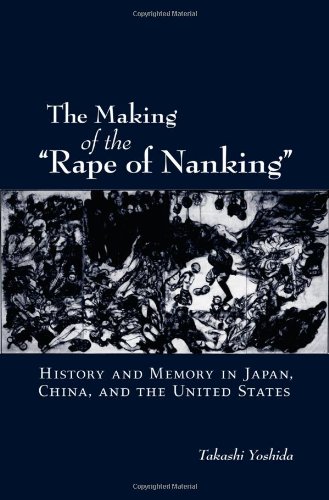
The Making of the Rape of Nanking History and Memory in Japan China and the United States 1st Edition by Takashi Yoshida ISBN 0195346211 9780195346213
Original price was: $50.00.$35.00Current price is: $35.00.
The Making of the Rape of Nanking History and Memory in Japan China and the United States 1st Edition by Takashi Yoshida – Ebook PDF Instant Download/Delivery: 0195346211, 9780195346213
Full download The Making of the Rape of Nanking History and Memory in Japan China and the United States 1st Edition after payment
Product details:
ISBN 10: 0195346211
ISBN 13: 9780195346213
Author: Takashi Yoshida
On December 13, 1937, the Japanese army attacked and captured the Chinese capital city of Nanjing, planting the rising-sun flag atop the city’s outer walls. What occurred in the ensuing weeks and months has been the source of a tempestuous debate ever since.
It is well known that the Japanese military committed wholesale atrocities after the fall of the city, massacring large numbers of Chinese during the both the Battle of Nanjing and in its aftermath. Yet the exact details of the war crimes—how many people were killed during the battle? How many after? How many women were raped? Were prisoners executed? How unspeakable were the acts committed?—are the source of controversy among Japanese, Chinese, and American historians to this day.
In The Making of the “Rape of Nanking Takashi Yoshida examines how views of the Nanjing Massacre have evolved in history writing and public memory in Japan, China, and the United States. For these nations, the question of how to treat the legacy of Nanjing—whether to deplore it, sanitize it, rationalize it, or even ignore it—has aroused passions revolving around ethics, nationality, and historical identity. Drawing on a rich analysis of Chinese, Japanese, and American history textbooks and newspapers, Yoshida traces the evolving—and often conflicting—understandings of the Nanjing Massacre, revealing how changing social and political environments have influenced the debate. Yoshida suggests that, from the 1970s on, the dispute over Nanjing has become more lively, more globalized, and immeasurably more intense, due in part to Japanese revisionist history and a renewed emphasis on patriotic education in China.
While today it is easy to assume that the Nanjing Massacre has always been viewed as an emblem of Japan’s wartime aggression in China, the image of the “Rape of Nanking” is a much more recent icon in public consciousness. Takashi Yoshida analyzes the process by which the Nanjing Massacre has become an international symbol, and provides a fair and respectful treatment of the politically charged and controversial debate over its history.
Table of contents:
Part I Allies and Enemies in the Asia-Pacific War
1:Japan: Mobilizing the Nation, Sanitizing Aggression
2:China: Intolerable Atrocities
3:US: “The Rape of Nanking”
Part II The Storm of Postwar and Cold War Politics
4:Japan: Confronting the Nanjing Massacre
5:China: In Times of Civil and Cold War
6:US: Rebuilding Japan
Part III Bringing the Nanjing Massacre into Print
7:Japan: from “Victim Consciousness” to “Victimizer Consciousness”
8:China: Nationalizing Memory of the Nanjing Massacre
9:US: Focus on Japanese Denials of the Pat
Part IV The Internationalization of the Nanjing Massacre
10:Japan: A War Over History and Memory
11:China: The Nanjing Massacre and Patriotic Education
12:US: Rediscovery of the Nanjing Massacre
People also search for:
making 9
0 the power of 0
making x the subject of the formula
who is making the xbox handheld
when are they making the new xbox
is microsoft going to stop making the xbox
Tags: Takashi Yoshida, Making, Rape, Nanking, History, Memory, Japan, China, United, States