

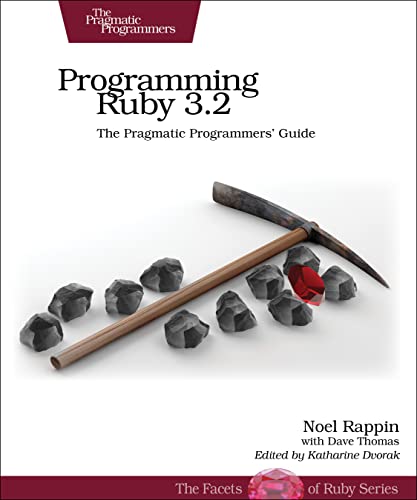
Programming Ruby 3 3 The Pragmatic Programmers Guide 5th Edition by Noel Rappin, Dave Thomas ISBN 1680509829 978-1680509823
Original price was: $50.00.$35.00Current price is: $35.00.
Programming Ruby 3 3 The Pragmatic Programmers Guide 5th Edition by Noel Rappin, Dave Thomas – Ebook PDF Instant Download/Delivery: 1680509829, 978-1680509823
Full download Programming Ruby 3 3 The Pragmatic Programmers Guide 5th Edition after payment
Product details:
ISBN 10: 1680509829
ISBN 13: 978-1680509823
Author: Noel Rappin, Dave Thomas
Table of contents:
1: Facets of Ruby
1.1: Getting Started
1.1.1: Installing Ruby
1.1.2: Installing Ruby for Windows
1.1.3: Running Ruby
1.1.4: Creating Ruby Programs
1.1.5: Getting More Information about Ruby
1.1.6: What’s Next
1.2: Ruby.new excerpt
1.2.1: Ruby Is an Object-Oriented Language
1.2.2: Some Basic Ruby
1.2.3: Arrays and Hashes
1.2.4: Symbols
1.2.5: Control Structures
1.2.6: Regular Expressions
1.2.7: Blocks
1.2.8: Reading and ‘Riting
1.2.9: Command-Line Arguments
1.2.10: Commenting Ruby
1.2.11: What’s Next
1.3: Classes, Objects, and Variables
1.3.1: Defining Classes
1.3.2: Objects and Attributes
1.3.3: Classes Working with Other Classes
1.3.4: Specifying Access Control
1.3.5: Variables
1.3.6: Reopening Classes
1.3.7: What’s Next
1.4: Collections, Blocks, and Iterators
1.4.1: Arrays
1.4.2: Hashes
1.4.3: Digging
1.4.4: Word Frequency: Using Hashes and Arrays
1.4.5: Blocks and Enumeration
1.4.6: What’s Next
1.5: More about Methods
1.5.1: Defining a Method
1.5.2: Calling a Method
1.5.3: What’s Next
1.6: Sharing Functionality: Inheritance, Modules, and Mixins excerpt
1.6.1: Inheritance and Messages
1.6.2: Modules
1.6.3: Inheritance, Mixins, and Design
1.6.4: What’s Next
1.7: Basic Types: Numbers, Strings, and Ranges
1.7.1: Numbers
1.7.2: Strings
1.7.3: Ranges
1.7.4: What’s Next
1.8: Regular Expressions
1.8.1: What Regular Expressions Let You Do
1.8.2: Creating and Using Regular Expressions
1.8.3: Regular Expression Patterns
1.8.4: Regular Expression Syntax
1.8.5: What’s Next
1.9: Expressions
1.9.1: Operator Expressions
1.9.2: Command Expressions
1.9.3: Assignment
1.9.4: Conditional Execution
1.9.5: Loops and Iterators
1.9.6: Pattern Matching
1.9.7: What’s Next
1.10: Exceptions
1.10.1: The Exception Class
1.10.2: Handling Exceptions
1.10.3: Raising Exceptions
1.10.4: Using Catch and Throw
1.10.5: What’s Next
1.11: Basic Input and Output
1.11.1: What Is an I/O Object?
1.11.2: Opening and Closing Files
1.11.3: Reading and Writing Files
1.11.4: Talking to Networks
1.11.5: What’s Next
1.12: Threads, Fibers, and Ractors
1.12.1: Multithreading with Threads
1.12.2: Running Multiple External Processes
1.12.3: Creating Fibers
1.12.4: Understanding Ractors
1.12.5: What’s Next
1.13: Testing Ruby Code
1.13.1: Why Unit Test?
1.13.2: Testing with Minitest
1.13.3: Structuring Tests
1.13.4: Creating Mock Objects in Minitest
1.13.5: Organizing and Running Tests
1.13.6: Testing with RSpec
1.13.7: What’s Next
2: Ruby in Its Setting
2.1: Ruby from the Command Line excerpt
2.1.1: Calling the Ruby Command
2.1.2: Ruby Command-Line Options
2.1.3: Making Your Code an Executable Program
2.1.4: Processing Command-Line Arguments to Your Code
2.1.5: Accessing Environment Variables
2.1.6: Where Ruby Finds Its Libraries
2.1.7: Using the Rake Build Tool
2.1.8: The Build Environment
2.1.9: What’s Next
2.2: Ruby Gems
2.2.1: Installing and Managing Gems
2.2.2: Using Bundler to Manage Groups of Gems
2.2.3: Writing and Packaging Your Own Code into Gems
2.2.4: Organizing Your Source Code
2.2.5: Distributing and Installing Your Code
2.2.6: What’s Next
2.3: Interactive Ruby
2.3.1: Using irb
2.3.2: Navigating irb
2.3.3: Configuring irb
2.3.4: What’s Next
2.4: Debugging Ruby
2.4.1: Printing Things
2.4.2: The Ruby Debugger
2.4.3: Pry
2.4.4: Debugging Performance Issues with Benchmark
2.4.5: What’s Next
2.5: Typed Ruby excerpt
2.5.1: What’s a Type?
2.5.2: Official Ruby Typing with RBS
2.5.3: Ruby Typing with Sorbet
2.5.4: What’s Next
2.6: Documenting Ruby
2.6.1: Documenting with RDoc
2.6.2: Adding RDoc to Ruby Code
2.6.3: Running RDoc
2.6.4: Documenting with YARD
2.6.5: What’s Next
2.7: Ruby Crystallized
2.7.1: Ruby and the Web
2.7.2: Ruby’s Web Utilities
2.7.3: Templating with ERB
2.7.4: Serving Ruby Code to the Web
2.7.5: Ruby in the Browser with Web Assembly
2.7.6: What’s Next
2.8: Ruby Style
2.8.1: Written Ruby Style
2.8.2: Using RuboCop
2.8.3: Using Standard
2.8.4: Ruby Style in the Large
2.8.5: Duck Typing
2.8.6: What’s Next
2.9: The Ruby Object Model and Metaprogramming
2.9.1: Understanding Objects and Classes
2.9.2: Defining Singleton Methods
2.9.3: Inheritance and Visibility
2.9.4: Modules and Mixins
2.9.5: Metaprogramming Class-Level Macros
2.9.6: Using instance_eval and class_eval
2.9.7: Using Hook Methods
2.9.8: A Metaprogramming Example
2.9.9: Top-Level Execution Environment
2.9.10: What’s Next
2.10: Reflection and Object Space
2.10.1: Looking at Objects
2.10.2: Looking at Classes
2.10.3: Calling Methods Dynamically
2.10.4: System Hooks
2.10.5: Tracing Your Program’s Execution
2.10.6: Behind the Curtain: The Ruby VM
2.10.7: Marshaling and Distributed Ruby
2.10.8: What’s Next
3: Ruby Language Reference
3.1: Language Reference: Literal Types and Expressions
3.1.1: Source Layout
3.1.2: Ruby Literals
3.1.3: Regular Expressions
3.1.4: Names
3.1.5: Values, Variables, and Constants
3.1.6: Expressions, Conditionals, and Loops
3.2: Language Reference: Objects and Classes
3.2.1: Method Definition
3.2.2: Invoking a Method
3.2.3: Aliasing
3.2.4: Defining Classes
3.2.5: Defining Modules
3.2.6: Access Control
3.2.7: Blocks, Closures, and Proc Objects
3.2.8: Exceptions
3.2.9: Catch and Throw
3.2.10: Typed Ruby
3.3: Ruby Library Reference
3.3.1: Library Reference: Core Data Types
- Dates and Times
- Math
- Numbers
- Random and SecureRandom
- Regexp
- Strings
- Symbols
3.3.2: Library Reference: Ruby’s Object Model
- BasicObject
- Class
- Comparable
- Kernel
- Method
- Module
- Object
3.3.3: Library Reference: Enumerators and Containers
- Array
- Enumerable
- Enumerator
- Hash
- Set
3.3.4: Library Reference: Input, Output, Files, and Formats
- CSV
- Dir
- File
- FileUtils
- IO
- JSON
- Pathname
- StringIO
- Tempfile
- URI
- YAML
3.3.5: Library Reference: Ruby on Ruby
- Benchmark
- Data
- Delegator and SimpleDelegator
- Logger
- ObjectSpace
- Observable
- OpenStruct
- PP
- Prism
- Ripper
- Singleton
- Struct
- Unbound Method
People also search for:
programming ruby 5th edition pdf
ruby-3.0.3
programming ruby book
ruby 3 book
ruby 3 tutorial
ruby 3.0 tutorial
Tags: Noel Rappin, Dave Thomas, Programming, Ruby 3 3, Pragmatic, Programmers, Guide