

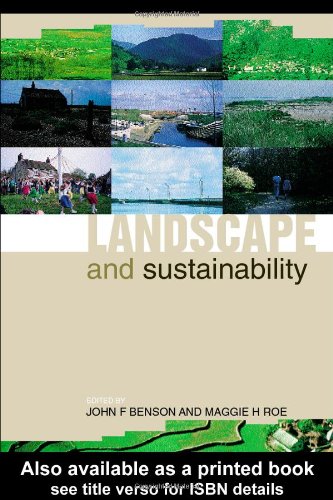
Landscape and Sustainability 1st Edition by John Benson, Maggie Roe ISBN 0419250808 978-0419250807


Original price was: $50.00.$35.00Current price is: $35.00.
Landscape and Sustainability 1st Edition by John Benson, Maggie Roe – Ebook PDF Instant Download/Delivery: 0419250808 , 978-0419250807
Full download Landscape and Sustainability 1st edition after payment
Product details:
ISBN 10: 0419250808
ISBN 13: 978-0419250807
Author: John Benson, Maggie Roe
This unique book is about landscape, sustainability and the practices of the professions which plan, design and manage landscapes at many scales and in many locations; urban, suburban and rural. Despite the ubiquity of ‘sustainability’ as a concept, this is the first book to address the relationship between landscape architecture and sustainability in a comprehensive way.
Much in the book is underpinned by landscape ecology, in contrast to the idea of landscape as only appealing to the eye or aspiring cerebrally to be fine art. As this book argues, landscape is and must be much more than this; landscape architecture is about making places which are biologically wholesome, socially just and spiritually rewarding.
Landscape and Sustainability 1st Table of contents:
1 The Scale and Scope of Landscape and Sustainability
Introduction
Landscape and the Scope of Landscape Architecture
Sustainability and the Scope of Sustainable Development
The End of the Beginning
References
2 The Ethics of Sustainability
Environmental Ethics
Homocentric Ethics
Non-Anthropocentric Ethics
Biocentric ethics
Ecocentric ethics
Deep ecology
Overview
Sustainability
Environmental sustainability
Sustainable growth and yield
Sustainable development
Intergenerational justice
Economic, political and social dimensions
The Role of the Profession of Landscape Architecture
Accommodation
Landscape architecture and ecology
The ecological approach
New technologies, new aesthetics
Regenerative design
Irreversible actions
Social dimensions
New aesthetics
Sustainability and the profession
References
3 The Landscape of Sustainable Economics
Introduction
Neo-Classical Economics, Landscape and Sustainability
Strict Sustainability and the Land Resource
Intolerable Costs
Costing intolerability
Selective and not-quite-strict sustainability
Quasi-Strict Sustainability, Restoration and Replacement
Restoration
Replacement
Sustaining Aggregate Capital
The Natural Resource Constraint
Sustaining virtual landscape
Compensation in something-close-to kind?
Sustainable Willingness to Pay?
Purchase?
Hedonic pricing
Contingent valuation
The new way
Compensation – trading with any old thing
Sustaining Equivalent Values
Discounting and the Road to Metaphorical Sustainability
Growth of the compensation fund
Limitations
The equity counter-argument
Time preference
Sustaining the Status Quo
Conclusion
References
4 The Social Dimensions of Landscape Sustainability
Introduction
The Changing State of Communities and their Landscapes
Theme 1: Social Structure
Democracy and sustainable landscapes
Concepts of community and community participation
Empowerment
Landscape, exclusion and social justice
Communities and decision making
Future potential: the development of integrated and responsive structures
Theme 2: Social Learning
Rights and responsibilities
Volunteering and citizenship
Building social capital
Cultural diversity, identity and character
Empowerment and changing perceptions: sustainability and the city
Behaviour, attitude and lifestyle
Building integrated thinking: community projects, funding bodies and regeneration
Conclusion
Acknowledgements
Notes
References
5 International Policies and Landscape Protection
Introduction
Landscape: A Unifying Concept
The World Heritage Convention and Cultural Landscapes
IUCN, Protected Areas and Protected Landscapes
Landscapes and Europe
Towards the Development of a European Landscapes Convention
The Draft European Landscape Convention1
National Level Action Under the Draft Convention
International Level Action Under the Draft Convention
Implications for the UK
Conclusion: Messages for US in the UK
Endnotes
References
6 Landscape Sustainability at the National and Regional Scales
Introduction
The Nature of National and Regional Sustainability: A Brief Résumé
Comprehending Regional and National Landscapes
Planning Regional and National Landscapes
Landscapes within Regional and National Sustainability Strategies
Conclusion
References
7 Landscape Planning at the Regional Scale
Introduction
Greening the North West: A Regional Landscape Strategy
Regional context
Approach to the work
Reflections on the North West Landscape Strategy
The New Framework for Landscape Planning at the Regional Scale
Regional Landscape Planning and Sustainability
Conclusion
References
8 Managing Whole Landscapes in the Post-Productive Rural Environment
Introduction
General Principles of whole Landscape Management in Regions of Food and Fibre Production
Engines of Change in the Rural Environment: Agriculture, Forestry and the Productivist Tradition
The Post-Productivist Transition: From Concept, to Policy, to Landscape Outcomes
Agriculture
The development of agri-environmental policy
Forestry
The development of the multi-purpose forest concept, and community forests
Indicative forestry strategies: whole landscape planning by the back door?
Organic farming: landscape implications of low-input, extensive agriculture
Raising the Scale: From Sites to Landscapes
Visioning future landscapes
Landownership and management issues
Conclusion
References
9 Landscape Planning and City Form
Introduction
Relative Sustainability
Landform Plans
Water Plans
Dunfermline East expansion
Swedish sustainable water projects
The Earth Centre, Doncaster
Vegetation Plans
Eco-Building Plans
Greening Methods in Practice
Block 103, Kreuzberg, Berlin
Wegsfeldhof, Hanover
Sustainable Land-Use Plans
Case study: Greenwich Peninsula
Greenwich Peninsula: landform planning
Greenwich Peninsula: water planning
Greenwich Peninsula: vegetation planning
Greenwich Peninsula: Planning for eco-building
Conclusion
References
10 Resources: The Raw Materials of Landscape
Introduction
Sustainable Landscape Planting: Harnessing Natural Processes
The contribution of vegetation to sustainable landscapes
Key principles of sustainable landscape planting
Creating sustainable landscape planting: plant selection and planting
Manipulation of site conditions: traditional plantings versus sustainable plantings
Vegetation Strategies
Non-planting techniques
Specification of plant material
Seed
Plant material
Native and exotic species selection
Genetically modified plants
Provenance of plant material and local genetic diversity
Planting Design
Hard Materials
Life Cycle Assessment
Environmental labelling
Guidelines towards more Sustainable Design Solutions
Efficient use of materials
Designing for re-use (exit strategies)
Selecting materials, which have the least environmental impact: re-use of materials
Recycling of materials
Selection of new materials
Conclusion
References
11 Sustainable Landscape Design in Practice
Introduction
Case Study 1: The Earth Centre
Design philosophy and layout
Access
Sustainability design brief
Materials and resources
Procurement
Implementation
Conclusion
Case Study 2: Center Parcs
Concept and design guidelines
Development phase
Biodiversity Action Initiative
Continuing design and management
Conclusion
Case Study 3: Meanwhile Gardens
Concept development
Community involvement
Access
Materials
Conclusion
Case Study 4: Oostvaardersplassen
History of development
Hydrology
Grazing
Access
Sustainable landscape design at Oostvaardersplassen
Conclusion
Concluding Discussion
Acknowledgements
References
12 The Community and the Landscape Professional
Introduction
Processes for Landscape Change – The Landscape Professional and Community Input
New Roles
Consultants as ‘community builders’
New Expertise
New Techniques: The Toolbox
The Practitioner and the Community
Issues for the practitioner
Issues for communities: problems from within
Issues for communities: problems from outside
Efficacy of present methods: assessment and measurement
Conclusion
Acknowledgements
References
13 Sustainable Landscape Management
Introduction – The Relationship of Landscape Management to Design
Sustainability and landscape management
Managing Landscapes Sustainably
Inputs, outputs and protection of resources
Agrochemicals
Machinery, energy, labour and costs
Energy, labour and time in landscape management
Water
Waste management
Soils and soil additives
How much management does a landscape need?
Do ecological styles of landscape require less inputs?
Cost savings
Managing Sustainable Landscapes
Enhancing the role of people in landscape management
Management in a changing world
Conclusion
Acknowledgements
References
14 Visions of Sustainability
Introduction
Theory and Stories in the Age of the Postmodern Narrative
Coding Visions into Stories
Sight and insight
Hubris and anthropocentrism
Perceiving significant patterns
The Fairy Path
Language as Infrastructure, Landscape as Infrastructure
Language, Vision, and Stories – A Conclusion and a Beginning
People also search for Landscape and Sustainability 1st:
landscape sustainability
land and sustainability
lands end sustainability report
landscape architecture and sustainability
sustainable landscape architecture pdf