

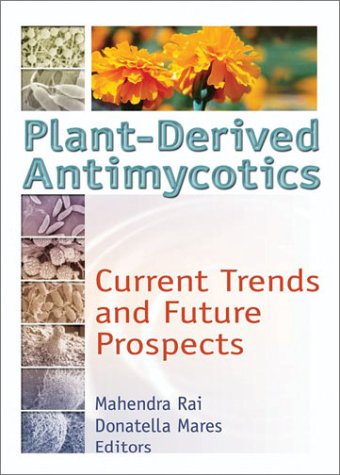
Plant Derived Antimycotics Current Trends and Future Prospects 1st Edition by M K Rai, Donatella Mares ISBN 1560229276 9781560229278


Original price was: $50.00.$35.00Current price is: $35.00.
Plant Derived Antimycotics Current Trends and Future Prospects 1st Edition by M.k. Rai, Donatella Mares – Ebook PDF Instant Download/Delivery: 1560229276, 9781560229278
Full download Plant Derived Antimycotics Current Trends and Future Prospects 1st Edition after payment
Product details:
ISBN 10: 1560229276
ISBN 13: 9781560229278
Author: M.k. Rai, Donatella Mares
An important overview of the state of the art in naturally occurring antimycotics!
Here is a comprehensive and innovative examination of the antimycotic potential of essential plant oils and extracts against fungal infections affecting humans, animals, plants, and foodstuffs. Plant-Derived Antimycotics emphasizes the antimycotic activity of plants found in Central America, India, Nepal, Fiji, and China–areas rich in phyto-diversity and traditional botanical/medical knowledge.
From editor M.K. Rai: “Since the inception of human civilization men have been using herbs against various mycotic infections. In the recent past, several antimycotic agents have been introduced into the market due to their rapid curative properties. Still, the quest for new antifungal agents of a fungicidal rather than fungistatic nature continues. Furthermore, there has been a dramatic increase in the new spectrum of fungal infections known as opportunistic fungal pathogens. Consequently, plant-derived antimycotics are gaining importance, being natural, cheaper, safer, eco-friendly, and within the reach of the common man.”
With a distinguished list of contributors from around the world, Plant-Derived Antimycotics explores:
- antifungal compounds that strengthen plant-defense systems
- traditional herbs that have revealed their antifungal properties
- newer, faster methods of screening and evaluating antifungal drugs
- natural antimycotics derived from plants in Croatia, South America, South Africa, China, India, and Fiji
- the mechanism of herbal antimycotic action
- the diversity of antimycotic efficacy in Asteraceous and Meliaceous plants
- new bioactive antifungal molecules
Plant-Derived Antimycotics is an essential reference for pharmacologists, microbiologists, clinical mycologists, oncologists, immunologists, drug manufacturers, botanists and ethnobotanists, phytochemists, herbalists, and everyone searching for a natural remedy for the new spectrum of opportunistic fungal infections generated by the immunocompromising difficulties encountered by AIDS and cancer patients. Color illustrations, photographs, charts, tables, and graphs make the information easier to absorb and understand.
Table of contents:
-
About the Editor
-
Contributors
-
Preface
-
Chapter 1. Overview: Oxidative Stress and Postharvest Produce
4.1 Active Oxygen Species
4.2 General AOS Activity
4.3 AOS Generation
4.4 Conclusion -
Chapter 2. Postharvest Response of Horticultural Products to Ozone
5.1 Introduction
5.2 Ozone Chemistry
5.3 Physiological Effects on Plants
5.4 Postharvest Use on Fresh Produce
5.5 Conclusion and Topics for Further Research -
Chapter 3. Low Temperature As a Causative Agent of Oxidative Stress in Postharvest Crops
6.1 Introduction
6.2 Chilling Injury
6.3 Low-Temperature Sweetening
6.4 Low-Temperature Stress-Related Quality Defects
6.5 Temperature Preconditioning to Inhibit Low-Temperature Oxidative Stress
6.6 Conclusion
6.7 Issues and Topics for Further Research -
Chapter 4. Effects of Storage Conditions and Postharvest Procedures on Oxidative Stress in Fruits and Vegetables
7.1 Introduction
7.2 Maturity at Harvest
7.3 Storage Duration
7.4 Storage Temperature
7.5 Postharvest Water Loss
7.6 Controlled and Modified Atmospheres
7.7 Ethylene
7.8 Irradiation
7.9 Future Directions -
Chapter 5. Superficial Scald—A Postharvest Oxidative Stress Disorder
8.1 Chemistry of Scald
8.2 Scald and Oxidative Stress Theories
8.3 Ethylene and Scald
8.4 Postharvest Scald Treatments to Control Oxidative Stress
8.5 Conclusion and Future Research Direction -
Chapter 6. Oxidative Stress Affecting Fruit Senescence
9.1 Introduction
9.2 Oxidative Stress
9.3 Factors Affecting Oxidative Stress and Senescence
9.4 Recent Research into Fruit Oxidative Stress
9.5 Conclusion
9.6 Issues for Further Research -
Chapter 7. Antioxidants
10.1 Introduction
10.2 Lipid-Soluble Membrane-Associated Antioxidants
10.3 Water-Soluble Antioxidants
10.4 Enzymatic Antioxidant Systems
10.5 Antioxidants During Postharvest Storage
10.6 Conclusion and Directions for Future Research -
Chapter 8. How Respiring Plant Cells Limit the Production of Active Oxygen Species
11.1 Introduction
11.2 Sites of Active Oxygen Species Production in the Mitochondrial Electron Transport Chain
11.3 Intracellular Oxygen Concentration
11.4 The Alternative Oxidase
11.5 The Plant Uncoupling Mitochondrial Protein
11.6 Q-Cycle Inhibitors
11.7 The Q Pool
11.8 Conclusion
11.9 Issues and Topics for Future Research -
Chapter 9. Physiological Effects of Oxidative Stress in Relation to Ethylene in Postharvest Produce
12.1 Introduction
12.2 Ethylene Physiology in Postharvest
12.3 Future Directions -
Chapter 10. Genetic Variation and Prospects for Genetic Engineering of Horticultural Crops for Resistance to Oxidative Stress Induced by Postharvest Conditions
13.1 Introduction
13.2 AOS Metabolism
13.3 Senescence, Ripening, and AOS Metabolism
13.4 Chilling Injuries of Fruits and Vegetables
13.5 Genetic Approaches: Are They Feasible?
13.6 Conclusion and Future Research -
Chapter 11. Postharvest Treatments of Control Oxidative Stress in Fruits and Vegetables
14.1 Introduction
14.2 Control of Oxidative Injury Using Antioxidant Dips and Edible Coatings
14.3 Postharvest Treatments to Control Oxidant Injury in Fruits and Vegetables
14.4 Future Directions -
Index
-
Reference Notes Included
People also search for:
plant derived antimycotics current
plant derived antimycotics
plant derived products
plant derived pharmaceuticals
plant derived toxins
plant antibiotic resistance
Tags: M K Rai, Donatella Mares, Plant Derived Antimycotics, Current Trends, Future Prospects