

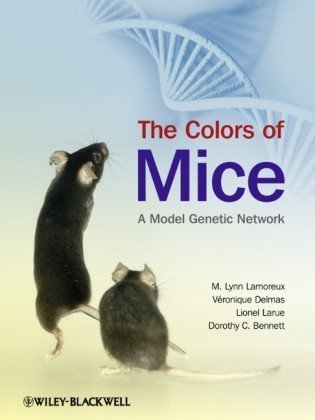
The Colors of Mice A Model Genetic Network 1st Edition by M Lynn Lamoreux , Véronique Delmas , Lionel Larue , Dorothy Bennett ISBN 1405179546 978-1405179546


Original price was: $50.00.$35.00Current price is: $35.00.
The Colors of Mice A Model Genetic Network 1st Edition by M Lynn Lamoreux , Véronique Delmas , Lionel Larue , Dorothy Bennett – Ebook PDF Instant Download/Delivery:1405179546, 978-1405179546
Full download The Colors of Mice A Model Genetic Network 1st Edition after payment
Product details:
ISBN 10: 1405179546
ISBN 13: 978-1405179546
Author: M Lynn Lamoreux , Véronique Delmas , Lionel Larue , Dorothy Bennett
Serving the needs of pigment cell biologists, cellular physiologists, developmental geneticists, researchers interested in melanoma and more, this new book showcases a blend of new technologies and new insights in the field of pigmantary genetics of mice, with comparative information on other animals. Graduate students can learn here the terminology and scope of the field, and animal fanciers can discover the genetics behind common color variants of mammals. The book is hailed for being written by four of the premier scientists in the field. These authors aim to present the molecular /cellular work in the context of phenotype and the interacting functions of genes that direct the development and function of one biological system. For other researchers, the depth of genetic knowledge on the pigmantary system makes it a valuable model for the study of other systems.
Table of contents:
Part I: Introduction to the Pigmentary System.
1. Introduction to the Pigmentary System.
1.1. Introduction.
1.2. Colors of vertebrate animals.
1.3. Other pigment cells.
1.4. The epidermal melanin unit.
1.5. Mammalian hair.
1.6. Melanosome biogenesis and translocation.
1.7. Melanin.
1.8. Hair growth.
1.9. Hair growth cycles.
1.10. Embryonic development of the pigment cell lineage.
1.11. Pigment cells in culture.
1.12. Conclusion.
Appendix: color loci of the mouse.
Part II: The Pigmentary Loci.
2. Introduction to Mutant Pigmentary Genes.
2.1. Defects of normal melanocyte development: white spotting and graying with age.
2.2. Defects in normal melanosome development: albinism.
2.3. Transport of melanosomes to other cells: the ‘dilute’ phenotype.
2.4. Pigment-type switching: from eumelanogenesis to pheomelanogenesis.
3. White Spotting and Progressive Graying.
3.1. Definitions and general background .
3.2. Pigment cell development: developmental biology.
3.3. Cellular signaling pathways for melanocytes.
3.4. Pigment phenotypes and the classical white-spotting genes.
3.5. The head, heart, ears, and eyes.
4. ’Albinism’ and the Failure of Normal Melanosome Development.
4.1. Background.
4.2. The melanosomal matrix.
4.3. The enzymes that catalyze melanogenesis.
4.4. Membrane proteins that regulate the internal milieu of the melanosome.
4.5. Protein processing and routing to the maturing melanosome.
4.6. Melanosome transport.
5. Pigment-Type Switching.
5.1. Introduction.
5.2. Yellow phenotypes.
5.3. Melanin pigment .
5.4. Melanogenesis and the eumelanin/pheomelanin switch mechanism.
5.5. Signaling the switch mechanism at the cellular level.
5.6. Yellow genes.
Part III: Technology and Resources.
6. Novel Mouse Pigmentary Mutants Generated by Genetic Manipulation.
6.1. Introduction.
6.2. Mouse transgenesis: generation of genetically engineered mice.
6.3. Coat-color transgenic mice.
6.4. The coat-color mutants generated by gene targeting.
6.5. Influence of the genetic background.
6.6. Conclusions.
7. Other Species and Other Resources.
7.1. Introduction.
7.2. Resources.
7.3. Other species.
References.
Index.
People also search for:
mice models
frequency of mice with the dd genotype on light-colored substrate
molecular genetics of the color mutations in rock pocket mice
the genetic makeup of a mouse population
Tags: M Lynn Lamoreux, Véronique Delmas, Lionel Larue, Dorothy Bennett, Colors of Mice A