

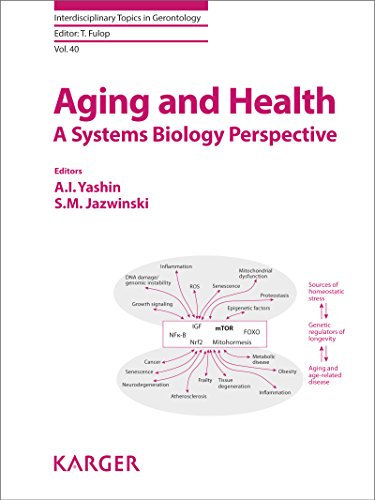
Aging and Health A Systems Biology Perspective 1st Edition by Karger 9783318027297 3318027294

Original price was: $50.00.$35.00Current price is: $35.00.
Aging and Health A Systems Biology Perspective 1st Edition by Karger – Ebook PDF Instant Download/Delivery: 9783318027297, 3318027294
Full download Aging and Health A Systems Biology Perspective 1st Edition after payment
Product details:
ISBN 10: 3318027294
ISBN 13: 9783318027297
Author: S. Karger AG
Aging is a major risk factor for chronic diseases, which in turn can provide information about the aging of a biological system. This publication serves as an introduction to systems biology and its application to biological aging. Key pathways and processes that impinge on aging are reviewed, and how they contribute to health and disease during aging is discussed. The evolution of this situation is analyzed, and the consequences for the study of genetic effects on aging are presented. Epigenetic programming of aging, as a continuation of development, creates an interface between the genome and the environment. New research into the gut microbiome describes how this interface may operate in practice with marked consequences for a variety of disorders. This analysis is bolstered by a view of the aging organism as a whole, with conclusions about the mechanisms underlying resilience of the organism to change, and is expanded with a discussion of circadian rhythms in aging. Finally, the book presents an outlook for the development of interventions to delay or to reverse the features of aging. The publication is recommended to students, researchers as well as professionals dealing with public health and public policy related to an aging society.
Aging and Health A Systems Biology Perspective 1st Table of contents:
References
Introduction to the Theory of Aging Networks
Abstract
In the Beginning: Reductionism
Is a System Complicated or Is It Complex?
Properties of Complex Systems
Nonlinear Dynamics and Aging
The Emergence of Systems Biology
An Example: Reliability Theory
Networks and Graphs
From Data to Graphs
Network Structures and Connectivity
Power Plots and Scale-Free Networks
Categorizing Small-World Networks
Node-Node Connectivities
Clusters and Hierarchies
Robustness, Resilience and Frailty
Conclusion
Closing Thoughts
Future Directions
Acknowledgements
References
Applications to Aging Networks
Abstract
Networks and Graphs
Creating a Longevity Network: An Example with Yeast
Analyzing the Network: An Example with Yeast and Caenorhabditis elegans
Power Plots and Scale-Free Networks
Categorizing Small-World Networks
Node-Node Connectivities
Interpreting the Results
Software for Network Analysis
Future Directions
Closing Thoughts
Acknowledgements
References
Computational Systems Biology for Aging Research
Abstract
Rationale for Using Systems Modelling for Aging Research
Advantages over and Interactions with Conventional Techniques
Computational Systems Modelling Approaches for Aging Research
Ordinary Differential Equations and Partial Differential Equations
Stochastic Reaction Networks and Probability-Based Models
Petri Net Models, Boolean Networks and Agent-Based Models
Model Building
Step 1: Selecting a System to Model, and Step 2: Checking for Previous Models
Step 3: Network Diagram Construction, and Step 4: Deciding on a Mathematical Framework
Step 5: Identify a Suitable Modelling Tool, and Step 6: Setting the Initial Conditions/ Parameters
Step 7: Model Simulation, and Step 8: Model Validation/Parameter Inference
Step 9: Hypothesis Examination, and Step 10: Further Wet Lab Experimentation
Computational Systems Models of Aging – From Cell to Whole Body
Conclusions
References
How Does the Body Know How Old It Is? Introducing the Epigenetic Clock Hypothesis
Abstract
Reasons to Believe in an Aging Clock
Modulation of the Aging Clock Suggests a Demographic Purpose
Aging Clocks
Cellular Senescence and the Telomere Clock
Other Known Biological Clocks
Epigenetic Clock Hypothesis
Testing the Hypothesis: Medical Implications
Footnote
References
The Great Evolutionary Divide: Two Genomic Systems Biologies of Aging
Abstract
Rarely Sexual Evolutionary Genetics: Theoretical Expectations for Aging Genomics
Rarely Sexual Evolutionary Genetics: Implications for the Systems Biology of Aging
Evolutionary Genetics of Outcrossing Mendelian Populations: General Genomic Findings
Evolutionary Genetics of Outcrossing Mendelian Populations: Implications for Their Systems Biology of Aging
The Two Kinds of Evolutionary Genomics and the Systems Biology of Aging
Systems Biology of Aging in Largely Asexual or Inbred Populations
Systems Biology of Aging in Outcrossing Mendelian Populations
Application to the Systems Biology of Aging in Humans
Acknowledgements
References
Development and Aging: Two Opposite but Complementary Phenomena
Abstract
A Brief View of the Two Sides of Life
Common Mechanisms between Development and Aging Outcomes
The Essential Understanding of Topological Parameters
Decoding the Networks: New Insights into DevAge and Its Relationship to Inflammation
Decoding the Networks: DevAge and Its Relation to Epigenetics
Decoding the Networks: Glucose Metabolism and Developmental Changes
Summary of the Observed Mechanisms and Further Considerations
References
Aging as a Process of Deficit Accumulation: Its Utility and Origin
Abstract
The Accumulation of Deficits as a Proxy Measure of Aging
Individual Frailty Trajectories: Stochastic Patterns
Health Changes in the Fittest (The Zero State of Frailty)
The Origin of Deficit Accumulation – A Stochastic Framework
Queuing Theory and Little’s Law
Age-Related Deficit Accumulation Reflects the Increase of Age-Related Time of Recovery
Changes in the Distribution of the Number of Deficits Indicates Change in Recovery Potential
Estimating Biological Age
Aging, Health, Wealth and Life Expectancy Worldwide
Conclusions and Perspectives
References
Low-Grade Systemic Inflammation Connects Aging, Metabolic Syndrome and Cardiovascular Disease
Abstract
Aging, Diseases and the Regulation of Energy Allocation
Aging and the Immune System
Inflammation in Obesity and Metabolic Syndrome during Aging
The Immune System and Type 2 Diabetes
The Liver and Inflammation in Metabolic Syndrome
Inflammatory Function, Atherosclerosis and Other Cardiovascular Consequences
Conclusion
References
Modulating mTOR in Aging and Health
Abstract
mTOR and Aging
mTOR Signaling
mTOR in Nutrient and Growth Factor Sensing
Insulin/Insulin-Like Growth Factor/Phosphoinositide/AKT
Ribosome Capacity
AMPK
Amino Acid Sensing at the Lysosome
Caloric Restriction
mTOR Downstream Signaling and Biological Relevance
mRNA Translation
Autophagy
Mitochondrial Function and Metabolism
Stem Cell Maintenance
mTOR and Age-Related Disease
Longevity and Health Span
mTOR and Disease
Heart Disease
Neurodegenerative Disease
Cancer
Diabetes and Obesity
Immune Function
Inflammation
Renal Disease
Age-Related Macular Degeneration
Hutchinson-Gilford Progeria and Laminopathies
Systems Biology Approaches to Studying mTOR
References
Melatonin and Circadian Oscillators in Aging – A Dynamic Approach to the Multiply Connected Players
Abstract
A Systemic View on the Interconnections of Major Aging Processes
Vicious Cycles
Beneficial Cycles
Pleiotropy of Melatonin in the Context of Aging
Controversial Results at First but Not at Second Glance: The Importance of Circadian Dynamics
Conclusion
References
Diet-Microbiota-Health Interactions in Older Subjects: Implications for Healthy Aging
Abstract
Physiological and Clinical Issues That Can Impact on the Gut Microbiota in Elderly
Culture-Based Analyses of Intestinal Microbiota of Elderly
The Technological Revolution
Culture-Independent Microbiota of Older Persons
Microbial-Based Changes in the Elderly
Cultural Microbial Differences Observed in Different Age Groups
Diet as a Driver of Microbiota Variation in Older People
Factors Influencing the Gut Microbiota in Older Persons
The Impact of Diet on Microbiota Variation
Dietary Interventions
Prebiotic Intervention Studies in Elderly Populations
Prospectus, Knowledge Gaps and Required Studies
Diet-Microbiota Interactions
Diet-Microbiota-Medication Interactions
Ecosystem Management, Microbiota Restoration and Replacement
References
Systems Biology Approaches in Aging Research
Abstract
The Emergence of Systems Biology ‘Flavors’
The Conceptual Workflows of Systems Biology
Systems Biology Comes in Several ‘Flavors’
The Omics Approach
Reconstruction and Simulation of Large Biological Networks
Elucidation of the Complexity Emerging from Nonlinear Network Motifs
Multi-Scale Data Integration and Modelling
Why Systems Biology in Aging?
Aging Phenotypes Are Associated with Large and Complex Networks
Motifs of Nonlinear Dynamics in Aging Networks
Aging as a Systemic Phenomenon
From Understanding to Manipulation
Aging Research Projects Using the Systems Biology Approach: The GerontoSys Initiative
The Hematopoietic System Is an Aging Research Hub
Histone Modifications and Stem Cell Fate
Understanding mTOR Activation through Computational Modelling
ROS – The Dose Makes the Poison
Design Concept, Development and Challenges of a Systems Biology Aging Project: The Case Study of the ROSage Project
Hypothesis, Goals and Strategy
An Overall Perspective on the Current Biological Insights Generated in the Project
Results Derived from the Modeling Approach Used
Conclusions
Acknowledgements
References
Conservative Growth Hormone/IGF-1 and mTOR Signaling Pathways as a Target for Aging and Cancer Prevention: Do We Really Have an Antiaging Drug?
Abstract
Antidiabetic Biguanides as Geroprotectors
Effects of Rapamycin on Aging and Longevity
Conclusion
Acknowledgements
References
Author Index
Subject Index
People also search for Aging and Health A Systems Biology Perspective 1st:
biology and aging
aging and homeostasis
aging systems and geriatrics study section
aging and health studies
aging biology definition
Tags:
Karger,Aging,Health