

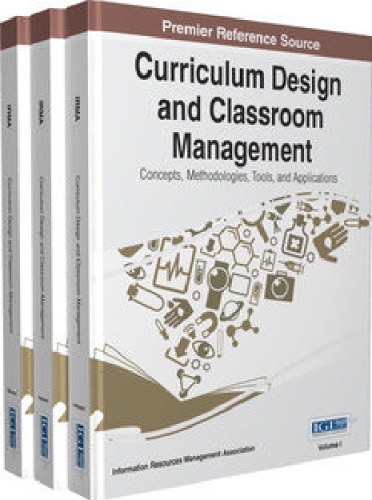
Curriculum Design and Classroom Management Concepts Methodologies Tools and Applications 1st Edition by Information Resources Management Association ISBN 1466682469 9781466682467

Original price was: $50.00.$35.00Current price is: $35.00.
Curriculum Design and Classroom Management Concepts Methodologies Tools and Applications 1st Edition by Information Resources Management Association – Ebook PDF Instant Download/Delivery: 1466682469, 9781466682467
Full download Curriculum Design and Classroom Management Concepts Methodologies Tools and Applications 1st Edition after payment
Product details:
ISBN 10: 1466682469
ISBN 13: 9781466682467
Author: Information Resources Management Association
Educational pedagogy is a diverse field of study, one that all educators should be aware of and fluent in so that their classrooms may succeed.
Curriculum Design and Classroom Management: Concepts, Methodologies, Tools, and Applications presents cutting-edge research on the development and implementation of various tools used to maintain the learning environment and present information to pupils as effectively as possible. In addition to educators and students of education, this multi-volume reference is intended for educational theorists, administrators, and industry professionals at all levels.
Table of contents:
Chapter 1 – Literature Review in Conceptions and Approaches to Teaching using Blended Learning
Chapter 2 – Flipping STEM Learning: Impact on Students’ Process of Learning and Faculty Instructional Activities
Chapter 3 – Blended Learning to Support Alternative Teacher Certification
Chapter 4 – Blended and Online Learning in Virtual K-12 Schools
Chapter 5 – Factors Predisposing Academics towards the Use of Blended Strategies: A Model
Chapter 6 – Benefits of the Flipped Classroom Model
Chapter 7 – Promoting Active Learning through a Flipped Course Design
Chapter 8 – Blended Learning and Technological Development in Teaching and Learning
Chapter 9 – Online Learning in Illinois High Schools: The Voices of Principals!
Chapter 10 – Learning Theory and Online Learning in K-12 Education: Instructional Models and Implications
Chapter 11 – Factors Shaping Academics’ Use of Technology in Teaching: A Proposed Model
Chapter 12 – A Mobile Learning Overview by Timeline and Mind Map
Chapter 13 – Factors Related to Students’ Performance of Hybrid Learning in an English Language Course
Chapter 14 – Technology-Enhanced Learning: Towards Providing Supports for PhD Students and Researchers in Higher Education
Chapter 15 – A Quest about eQuest and Blended Learning in Teacher Education: An Indian Study
Chapter 16 – An Example Application of an Artificial Intelligence-Supported Blended Learning Education Program in Computer Engineering
Chapter 17 – A Blended Course to Teach Graphical Programming Using LabVIEW
Chapter 18 – Fantasy Workshop: Active Use of a Learning Management System (LMS) as an Approach to Blended Learning
Chapter 19 – Evaluating a Learning Management System to Support Classroom Teaching
Chapter 20 – Blogs in Teacher Education: Knowledge Sharing among Pre-Service Teachers on a Group Course Blog
Chapter 21 – Implications of Mobile Devices in a Bachelor of Education Program
Chapter 22 – Soft and Hard Technologies in Technology Education
Chapter 23 – Use of Tablet Computers and Mobile Apps to Support 21st Century Learning Skills
Chapter 24 – Increasing Research Students’ Engagement through Virtual Communities
Chapter 25 – Internet-Based Technology Use in Second Language Learning: A Systematic Review
Chapter 26 – Assistive Technology and Distance Learning: Making Content Accessible
Chapter 27 – Enterprise 2.0 in Engineering Curriculum
Chapter 28 – Blended Course Design: Where’s the Pedagogy?
Chapter 29 – A Teaching Model for the College Algebra Flipped Classroom
Chapter 30 – Blended Learning Support for Undergraduate Students’ Research and Writing Skills Development
Chapter 31 – Blended Learning for Learners in SMEs
Chapter 32 – Active Learning in the Flipped English Language Arts Classroom
Chapter 33 – A Flipped Classroom Design for Preservice Teacher Training in Assessment
Chapter 34 – Designing Quality Blended Courses
Chapter 35 – A Framework for Promoting Complex Learning in a Blended Learning Environment
Chapter 36 – Shifting a Face-to-Face (F2F) Course to the Blended Environment: A Framework for Transference
Chapter 37 – Impact of Technological Advancement on the Higher Education Curriculum and Program Development
Chapter 38 – Blending in the Humanities: Course Model and Assessment Results
Chapter 39 – Optimizing Blended Teaching and Learning in Brick-and-Mortar Institutions
Chapter 40 – Designing Sustainability Curricula: A Case Following Chemical Engineering Curriculum Redesign
Chapter 41 – Managing and Planning Technology Usage and Integration in Teacher Education Programs in an Emergent Nation
Chapter 42 – Moving Beyond a Focus on Delivery Modes to Teaching Pedagogy
Chapter 43 – Prioritization of Design Requirements for Quality Engineering Education
Chapter 44 – How Do They Fare?: Learning Achievement and Satisfaction with Blended Learning for Traditional-Age Undergraduates at Moderately Selective Colleges
Chapter 45 – Blended for Student Engagement and Retention: The Case of Cinema and Visual Culture and Healthy Lifestyle Studies
Chapter 46 – The Effects of Problem-Based Learning with Flipped Classroom on Elementary Students’ Computing Skills: A Case Study of the Production of Ebooks
Chapter 47 – Barriers to Blended Teaching and Learning in Sub-Saharan Africa: Challenges for the Next Decade and Beyond
Chapter 48 – Introducing a Teaching Innovation to Enhance Students’ Analytical and Research Skills: A Blended Learning Initiative
Chapter 49 – Blended Learning Methods in Introduction to Teaching and Sociology of Education Courses at a University of Education
Chapter 50 – Blended Learning Implementation in Accounting Discipline: A Study in a Malaysian Public University
Chapter 51 – 21st Century Distance Learning in Sub-Saharan Africa: Distance and Blended Learning in Ghana
Chapter 52 – Adoption of Blended Learning Technologies in Selected Secondary Schools in Cameroon and Nigeria: Challenges in Disability Inclusion
Chapter 53 – A Comparative Study of Business and Engineering Students’ Attitude to Mobile Technologies in Distance Learning
Chapter 54 – Blended Learning at Ajman University of Science and Technology: A Case Study
Chapter 55 – Blended Learning Experience of Graduate Students
Chapter 56 – Flipping the Classroom in a Teacher Education Course
Chapter 57 – Case Study of a Hybrid Undergraduate Elementary Certification Program
Chapter 58 – Blended Learning and Digital Curation: A Learning Design Sequence
Chapter 59 – Co-Constructed Curricula: An Adult Learning Perspective
Chapter 60 – Teaching of Fluid Mechanics in Engineering Course: A Student-Centered Blended Learning Approach
Chapter 61 – The Role of Blogging in a Changing Society: Theory, Practice, and Implications
Chapter 62 – Successful Cases in Technology-Enabled Active Teaching and Metacognitive Learning Strategies in Blended Learning for Globalization
Chapter 63 – M-Learning in the Middle East: The Case of Bahrain
Chapter 64 – Using a Task-Based Approach for Supporting a Blended Learning Model for English as a Foreign Language
Chapter 65 – Using Blended Principles to Bridge the Gap between Online and On-Campus Courses
Chapter 66 – Triumphs and Tribulations of the Flipped Classroom: A High School Teacher’s Perspective
Chapter 67 – The Integration of Culturally Relevant Pedagogy and Project-Based Learning in a Blended Environment
Chapter 68 – Starting with the Learner: Designing Learner Engagement into the Curriculum
Chapter 69 – Quality Assurance in Transnational Education Management: The Developmental “Global Studies” Curriculum
Chapter 70 – High School Teachers’ Gender-Oriented Perceptions of Technology Integration
Chapter 71 – E-Learning Training Courses on Multicultural Education: An Example from Greece
Chapter 72 – Academics’ Perceptions of Using Technology with Face-to-Face Teaching
Chapter 73 – Multicultural Considerations for Curriculum Developers of Online Courses
Chapter 74 – Intercultural Communication and Sustainable Leadership: The Case of a Joint Master Course
Chapter 75 – Improve Collaboration Skills Using Cyber-Enabled Learning Environment
Chapter 76 – Artful Learning: Holistic Curriculum Development for Mind, Body, Heart, and Spirit
Chapter 77 – Preparing to Teach with Flipped Classroom in Teacher Preparation Programs
Chapter 78 – Innovations in Blended-Learning: Promoting Proficiency in Reading Comprehension among Students with Dyslexia
Chapter 79 – The Ever-Evolving Educator: Examining K-12 Online Teachers in the United States
Chapter 80 – Challenges and Opportunities in the First Year of a 1:1 iPad Initiative in a High-Poverty, Highly Diverse Urban High School
Chapter 81 – E-Learning: A Means to Increase Learner Involvement in Research
Chapter 82 – To Flip Or Not To Flip? That’s Not The Question: Exploring Flipped Instruction in Technology Supported Language Learning Environments
Chapter 83 – The Future of Curriculum Development in Distance Education
Chapter 84 – Service Science in Higher Education: Productization of Offshore Programs in Transnational Education
Chapter 85 – Librarian without Building in an E-Learning Environment: Needed Skills, Challenges, and Solutions
Chapter 86 – Trends of Blended Learning in K-12 Schools: Challenges and Possibilities
People also search for:
curriculum design and classroom management pdf
curriculum design and classroom management pdf free
what is curriculum design in education
classroom management curriculum
classroom curriculum design
Tags: Information Resources Management Association, Curriculum Design, Classroom Management, Concepts, Methodologies, Tools, Applications