

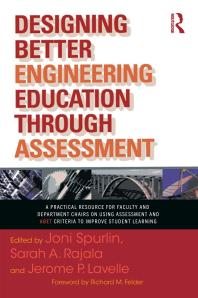
Designing Better Engineering Education Through Assessment A Practical Resource for Faculty and Department Chairs on Using Assessment and ABET Criteria to Improve Student Learning 1st Edition by Joni Spurlin,Sarah A Rajala,Jerome P Lavelle,Richard M Felder ISBN 1579226876 9781579226879

Original price was: $50.00.$35.00Current price is: $35.00.
Designing Better Engineering Education Through Assessment A Practical Resource for Faculty and Department Chairs on Using Assessment and ABET Criteria to Improve Student Learning 1st Edition by Joni Spurlin; Sarah A. Rajala; Jerome P. Lavelle; Richard M. Felder – Ebook PDF Instant Download/Delivery: 1579226876, 9781579226879
Full download Designing Better Engineering Education Through Assessment A Practical Resource for Faculty and Department Chairs on Using Assessment and ABET Criteria to Improve Student Learning 1st Edition after payment
Product details:
ISBN 10: 1579226876
ISBN 13: 9781579226879
Author: Joni Spurlin; Sarah A. Rajala; Jerome P. Lavelle; Richard M. Felder
This book is written for engineering faculty and department chairs as a practical guide to improving the assessment processes for undergraduate and graduate engineering education in the service of improved student learning. It is written by engineering faculty and assessment professionals who have many years of experience in assessment of engineering education and of working with engineering faculty. The book reflects the emphasis placed on student outcomes assessment by ABET, Inc., the organization that accredits most U.S. engineering, computer science and technology programs, as well as providing substantial equivalency evaluations to international engineering programs. The book begins with a brief overview of assessment theory and introduces readers to key assessment resources. It illustrates–through practical examples that reflect a wide range of engineering disciplines and practices at both large and small institutions, and along the continuum of students’ experience, from first year to capstone engineering courses through to the dissertation–how to go about applying formative and summative assessment practices to improve student learning at the course and program levels. For most institutions, assessment of graduate education is new; therefore, there are readers who will be particularly interested in the chapters and examples related to graduate education. This book concludes with a vision for the future of assessment for engineering education. The authors cover five basic themes:· Use of assessment to improve student learning and educational programs at both undergraduate and graduate levels· Understanding and applying ABET criteria to accomplish differing program and institutional missions· Illustration of evaluation/assessment activities that can assist faculty in improving undergraduate and graduate courses and programs· Description of tools and methods that have been demonstrated to improve the quality of degree programs and maintain accreditation· Identification of methods for overcoming institutional barriers and challenges to implementing assessment initiatives.
Table of contents:
PART ONE. BASICS OF ASSESSMENT
-
Understanding the Nature and Purpose of Assessment — Linda Suskie
-
Assessing Student Learning: Ensuring Undergraduate Students Are Learning What We Want Them to Learn — Joni E. Spurlin, Sarah A. Rajala, and Jerome P. Lavelle
-
Assessment Methods Used in Undergraduate Program Assessment — Joni E. Spurlin
-
Using Assessment Results for Improving Student Learning — Barbara M. Moskal
-
Tools and Assessment Methods Specific to Graduate Education — J. Joseph Hoey
PART TWO. BARRIERS AND CHALLENGES
-
Barriers and Challenges to Assessment in Engineering Education — J. Joseph Hoey and Eleanor W. Nault
-
Overcoming Resistance to Change — Sherra E. Kerns and Karan Watson
PART THREE. LEARNING ALONG THE CONTINUUM OF THE EDUCATIONAL EXPERIENCE
-
Assessing the First Year of Engineering Education — Jerome P. Lavelle and Sarah A. Rajala
-
Assessment for Improving Teaching and Student Learning within a Course — C. Dianne Raubenheimer
-
Using Formative Assessment for Program Improvement — Barbara M. Olds and Ronald L. Miller
-
The Capstone Experience at the Baccalaureate, Masters, and Doctorate Levels — David G. Meyer
PART FOUR. THE FUTURE
-
The Future of Assessment — Mary Besterfield-Sacre and Larry J. Shuman
People also search for:
designing better engineering education
design engineering education requirements
engineering design education
how to become a better design engineer
design engineer education and training
Tags: Joni Spurlin, Sarah A Rajala, Jerome P Lavelle, Richard M Felder, Designing Better Engineering Education, Assessment, ABET Criteria, Student Learning