

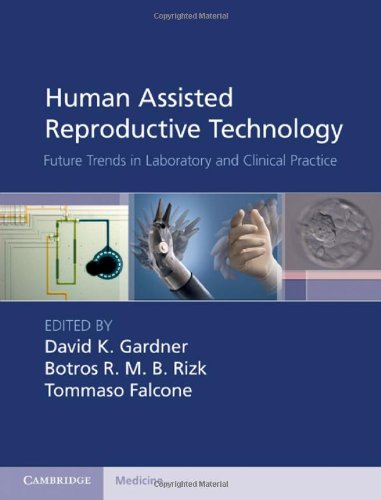
Human Assisted Reproductive Technology Future Trends in Laboratory and Clinical Practice 1st Edition by David K Gardner, Botros R M B Rizk, Tommaso Falcone ISBN 1107001129 9781107001121


Original price was: $50.00.$35.00Current price is: $35.00.
Human Assisted Reproductive Technology Future Trends in Laboratory and Clinical Practice 1st Edition by David K. Gardner, Botros R. M. B. Rizk, Tommaso Falcone – Ebook PDF Instant Download/Delivery: 1107001129, 9781107001121
Full download Human Assisted Reproductive Technology Future Trends in Laboratory and Clinical Practice 1st Edition after payment
Product details:
ISBN 10: 1107001129
ISBN 13: 9781107001121
Author: David K. Gardner, Botros R. M. B. Rizk, Tommaso Falcone
Human Assisted Reproductive Technology: Future Trends in Laboratory and Clinical Practice offers a collection of concise, practical review articles on cutting-edge topics within reproductive medicine. Each article presents a balanced view of clinically relevant information and looks ahead to how practice will change over the next five years. The clinical section discusses advances in reproductive surgery and current use of robotic surgery for tubal reversal and removal of fibroids. It looks into the refinement of surgical procedures for fertility preservation purposes. Chapters also discuss non-invasive diagnosis of endometriosis with proteomics technology, new concepts in ovarian stimulation and in the management of polycystic ovary syndrome, and evidence-based ART. The embryology section discusses issues ranging from three-dimensional in-vitro ovarian follicle culture, and morphometric and proteomics analysis of embryos, to oocyte and embryo cyropreservation. This forward-looking volume of review articles is key reading for reproductive medicine physicians, gynecologists, reproductive endocrinologists, urologists and andrologists.
Table of contents:
Chapter 1 Use of robotics in reproductive surgery
Chapter 2 Removal of hydrosalpinges and uterine leiomyoma to improve IVF outcome
Chapter 3 Ovarian endometriomas: effect on IVF outcome
Chapter 4 Impact of uterine cavity abnormalities on IVF and pretreatment cavity evaluation
Chapter 5 Sperm retrieval techniques
Chapter 6 New concepts in ovarian stimulation
Chapter 7 GnRH antagonists in ART
Chapter 8 Pharmacogenetics of ovarian stimulation in the twenty-first century
Chapter 9 Non-invasive diagnosis of endometriosis with proteomic technologies
Chapter 10 Antiangiogenic agents for endometriosis
Chapter 11 New concepts in the management of polycystic ovary syndrome
Chapter 12 Adjuvant therapy to increase implantation rates
Chapter 13 Ovarian hyperstimulation syndrome
Chapter 14 The evidence-based practice of assisted reproduction
Chapter 15 Three-dimensional in vitro ovarian follicle culture
Chapter 16 Artificial gametes
Chapter 17 Current status and future trends of the clinical practice of human oocyte in vitro maturation
Chapter 18 Oocyte and zona imaging
Chapter 19 Granulosa cells and their impact on human ART
Chapter 20 Sperm diagnosis: selecting the best sperm for IVF/ICSI treatment
Chapter 21 Embryo culture in the twenty-first century
Chapter 22 Morphometric analyses of embryos
Chapter 23 Embryo biopsy: towards trophectoderm isolation and blastocyst analysis
Chapter 24 Analysis of the embryonic transcriptome
Chapter 25 Analysis of embryo-derived factors as markers of developmental potential and viability
Chapter 26 Proteomics analysis of the endometrium and embryo. Can we improve IVF outcome?
Chapter 27 Analysis of embryo metabolism and the metabolome to identify the most viable embryo within a cohort
Chapter 28 Oocyte and embryo cryopreservation
People also search for:
the human assisted reproductive technology bill 2023
human assisted reproductive technology act 2004
human assisted reproductive technology act
human assisted reproductive technology bill
human assisted reproductive technology hart act 2004
human assisted reproductive technology order 2005
Tags: David K Gardner, Botros R M B Rizk, Tommaso Falcone, Human Assisted Reproductive Technology, Future Trends, Laboratory, Clinical Practice