

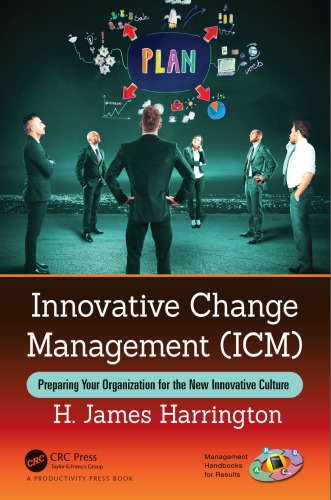
Innovative Change Management ICM Preparing Your Organization for the New Innovative Culture First Edition by James Harrington 9781351248532 1351248537

Original price was: $50.00.$35.00Current price is: $35.00.
Innovative Change Management ICM Preparing Your Organization for the New Innovative Culture First Edition by James Harrington – Ebook PDF Instant Download/Delivery: 9781351248532, 1351248537
Full download Innovative Change Management ICM Preparing Your Organization for the New Innovative Culture First Edition after payment
Product details:
ISBN 10: 1351248537
ISBN 13: 9781351248532
Author: James Harrington
Innovative Change Management (ICM) represents the accumulated wisdom and knowledge of one of the world’s foremost performance improvement specialists. It includes a clear and thorough explanation of the necessary critical tools for creating a system that results in a much higher percentage of your initiatives progressing to successful projects. Studies conducted by organizations such as Gartner, Ernst & Young, and Harrington Management Systems indicate that on average less than 25% of the innovative projects achieve sustained success. The American Productivity Quality Center’s 2018 survey report pointed out that 88% of the organizations felt that process management discipline must be changed and 53.8% felt they must create a continuous improvement culture. Through the effective use of the ICM methodology, you can turn thousands of lost employee hours into millions of dollars in increased profit. This book unveils to the reader for the first time how ICM combines project change management, culture change management, and project management concepts to create an effective and innovative organization. These concepts combined result in homogeneous improvements in performance improvement and cultural change. The book outlines a step-by-step procedure designed to apply ICM to complex programs such as process redesign and supply chain management as well as to simpler ones such as relocation of offices. In addition, it provides field-tested change methodologies to help you systematically include change into your strategic management plan. This book shows you how to: Set the stage for ICM. Develop a new management style that encourages innovation. Develop and implement a project change management methodology to support the project management methodology. Develop a cultural change management program. How to reward and recognize the innovation activities generated by your employees. Make ICM an important part of the strategic plan. Help employees understand the career-enhancing aspects of change How to maximize your organization’s ROC (return on change). Most of the activity related to change management focuses on successfully implementing individual projects. Statistics indicate that this is not enough to keep up with today’s rapid changing innovative competition. As most profitable organizations are working diligently on increasing their innovation capabilities, this focus is requiring a completely new restructured management style and behavioral patterns that are foreign to most of today’s successful managers.
Innovative Change Management ICM Preparing Your Organization for the New Innovative Culture First Table of contents:
Recognition
Prologue
Author
SECTION I: What Is Innovative Change Management (ICM)?
Chapter 1: Introduction to Innovative Change Management
Opening the Door to Change
Change Is Always Personal
Important Definitions Used in This Book
Two Types of ICM
PCM Advantages
CCM Advantages
Implementing PCM
Magnitude of Change Activities
PCM Cycle
The Status Quo Level
The Four Key ICM Factors
Key Guidelines
Chapter 2: The AS/IS Environment
Project Change Management Addresses People Problems
Innovation Areas
Today’s Employee
That’s Not Fair
The Open-Minded Employee
Chapter 3: Important Background
Building Commitment
Institutionalized Commitment
Internalized Commitment
Communication
Five-Way Communications
The Downside to Improvement (Layoffs)
The Future of ICM
Typical Life Cycles for Products and Projects
Murphy’s Laws Related to ICM
Billy Arcement’s Inputs
SECTION II: Management Action
Chapter 4: Leading by Example
Executive Leadership
Why Managers First
Management Leadership
Why Top Management Keeps ICM at Arm’s Length
Management’s Role
Basic Beliefs
Chapter 5: The Innovative Manager
Managers Are Ultimately Held Accountable
How to Get Creativity, Innovation, Involvement, and Participative Management to Thrive
Things Successful Managers Must Do
Caught in the Middle
Employment Security
Trust and Confidence
Tell Them Why
Do It with a Smile
Listening
Urgency and Persistence
Recognizing Good and Bad Performance—The Feedback Process
Participation/Employee Involvement
The Push–Pull of Management
How to Get Employees to Work
Management Threats
Self-Motivation
Employee Involvement
Communicate—Communicate—Communicate
Town Meetings
Developing the Desire to Change
The New Middle Manager
Management’s Change Process
Innovative Manager Summary
SECTION III: Rewards and Recognition
Chapter 6: Introduction to Innovative Change Management Tools and Methodologies
The Basis for Change
Introduction to Rewards and Recognition
Chapter 7: Rewards and Recognition
Reward Process Hierarchy
Why Reward People?
Key Reward Rules
Types of Rewards
Implementation of the Reward Process
Don’t Turn the Organization Upside Down
Reward and Recognition Advantages and Disadvantages
People Want Recognition
Chapter 8: Project Change Management and Culture Change Management Tools and Methodologies
Introduction
Different Approaches to ICM
Five Types of Change Assessment
Assessment 1: Innovation Maturity Analysis
Assessment 2: Change History Analysis
Assessment 3: Employee Opinion Survey
Assessment 4: Customer Focus Groups
Assessment 5: Is/Should Be Analysis
Assessment Report
Performance Improvement Management
Chapter 9: Suggestion Programs
Problems with U.S. Suggestion Programs
Getting Ideas Flowing
Idea Sharing
Problems without Known Solutions
Request for Corrective Action
Speak-Up Program
How to Get Creativity, Innovation, Involvement, and Participative Management to Thrive
SECTION IV: Project Change Management (PCM)
Chapter 10: Project Change Management Introduction
Overview of Project Change Management Methodology
PCM Methodology Roles, Authority, and Responsibilities
Change Facilitator
Black Hole
Sponsor
Advocates
Change Agent
Professional Staff
Target (Sometimes Called “Impacted Employee”)
Three Basic Organizational Structures
Chapter 11: Project Change Management Tools and Methodologies
Typical Project Change Management Tools and Usage
Project Management Life Cycle
Chapter 12: Setting the Stage for Project Change Management
The Change Process
A Structured Approach to Project Change Management
Individual Project Change Management Methodology Plan
PCM Implementation Plan
The Seven PCM Support Patterns
Innovative Change Management Approach Applied to a Complex Project
PCM and Project Management Working Together
How PCM Fits into Project Management Methodology
PCM Risk Factors
PCM Risk Factor #1: Cost of the Status Quo
Status Quo Pain Drivers
PCM Risk Factor #2: Vision Clarity
Pain Management
Transition
Other PCM Risk Factors
PCM Risk Factor #3: Sponsor’s Commitment
PCM Risk Factor #4: Change Agent/Advocacy Skills
PCM Risk Factor #5: Target Response
PCM Risk Factor #6: Culture/Organizational Alignment
PCM Risk Factor #7: Internal and External Organizational Events
PCM Risk Factor #8: Implementation Architecture
When to Use PCM
Chapter 13: Summary
Tactical Areas of Risk in Project Implementation
First Tactical Risk Area: Sponsor Commitment
SECTION V: Cultural Change Management (CCM)
Chapter 14: Culture Change Management Introduction
Introduction to Culture Change Management
Culture Change Management
Basic CCM Operating Mode
Designing the CCM Project
Thinking Outside of the Box
ICM Methodology Implementation
Phase 1: Cultural/Project Assessment
Phase 2: Include Change Management in the Organization’s Vision, Values, and Objectives
Mission Statement
Values
Strategic Focus
Critical Success Factors—Obstacles to Success
Establishing Expectations (Measurements)
Business Objectives
Performance Goals
Phase 3: Develop a CCM Plan
Chapter 15: Culture Change Management Process
The Culture Change Management Plan
Activity 1. Form a Team, Prepare the Project’s Future State Objectives/Vision Statement, and Get It Approved
Activity 2. Conduct an Assessment to Determine AS/IS Status
Activity 3. Develop a Future-State Targeted Operational Document
Activity 4. Ensure Organizational Alignment
Activity 5. Develop a CCM Change Approach Plan
Activity 6. Conduct a Value Proposition and Get It Approved and Funded
Activity 7. Develop the CCM Project Plan
Activity 8. Prepare a Detailed 6-Month Plan of Action That Is Included in the CCM Project Files
Activity 9. Get the Business Case Approved and the Project Included in the Organization’s Active Project Portfolio
Activity 10. Define Behavioral Patterns That Could Be Used to Indicate How the Culture, Innovation, and Creativity Are Changing
Activity 11. Implement the Detailed 6-Month Plan and Evaluate Results
Activity 12. Prepare a Detailed 7–18 Month Plan of Action That Is Included in the CCM in Project Files
Activity 13. Implement 7–18 Month Plan and Evaluate Results
Activity 14. Prepare a Detailed 19–36 Month Measurement and Reinforcement Plan of Action That Is Included in CCM Project Files
Activity 15. Implement 19–36 Month Measurement and Reinforcement Plan and Evaluate Results
Activity 16. Maintain the Measurement and Reinforcement Plan from Activity 15 to Ensure the Cultural Change Is Not Superficial
CCM Plan Design
Change Management
Strategic Change Risk Areas
Strategic Risk Area 1. Resilience
Strategic Risk Area 2. Change Knowledge
Strategic Risk Area 3. Managing Adaptation Resources
Strategic Risk Area 4. Understanding Important Leverage Points
Tactical Change Areas
Chapter 16: Culture Change Management Tools and Methodologies
Planning for Culture Change Management
Start the CCM Methodology with a No-Layoff Policy
Resiliency
Five Types of Personal Attitudes
Positive Attitude
Focused Attitude
Flexible Attitude
Organized Attitude
Proactive Attitude
Specialized Improvement Techniques and Methodologies for CCM
Assignment Rotation
Employee Suggestion Program
Improvement Effectiveness/Good Ideas Program
Creativity Motivation Program
Creativity Enhancement Programs
Area Activity Analysis (AAA)
Management Rotation
Speak-Up Program
Chapter 17: Culture Change Management Summary
IBM as an Example of Cultural Change
SECTION VI: Summary
Chapter 18: Innovative Change Management Summary
Fifty Ways to Improve
Technologies’ Impact on Change
Technology on the Move
Technology Movers
Technology Examples
How Much Should We Rely on Technology?
Pitfalls to Successful ICM
The Ten Commandments of ICM
Major Reference Books
Resilience
Appendix A
Appendix B
Appendix C
Index
People also search for Innovative Change Management ICM Preparing Your Organization for the New Innovative Culture First:
explain change management and the need for innovative strategies
change and innovation examples
innovative change definition
innovative change
innovation and change management examples
Tags:
Innovative Change,Management,James Harrington