

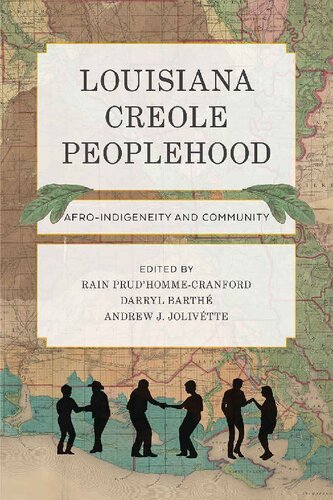
Louisiana Creole Peoplehood Afro Indigeneity and Community 1st Edition by Rain Prud’Homme Cranford, Darryl Barthe, Andrew J Jolivette ISBN 0295749504 9780295749501


Original price was: $50.00.$35.00Current price is: $35.00.
Louisiana Creole Peoplehood Afro Indigeneity and Community 1st Edition by Rain Prud’homme-Cranford; Darryl Barthé; Andrew J. Jolivétte – Ebook PDF Instant Download/Delivery: 0295749504, 9780295749501
Full download Louisiana Creole Peoplehood Afro Indigeneity and Community 1st Edition after payment
Product details:
ISBN 10: 0295749504
ISBN 13: 9780295749501
Author: Rain Prud’homme-Cranford; Darryl Barthé; Andrew J. Jolivétte
Transforms our understanding of Louisiana Creole community identity formation and practice
Over the course of more than three centuries, the diverse communities of Louisiana have engaged in creative living practices to forge a vibrant, multifaceted, and fully developed Creole culture. Against the backdrop of ongoing anti-Blackness and Indigenous erasure that has sought to undermine this rich culture, Louisiana Creoles have found transformative ways to uphold solidarity, kinship, and continuity, retaking Louisiana Creole agency as a post-contact Afro-Indigenous culture. Engaging themes as varied as foodways, queer identity, health, historical trauma, language revitalization, and diaspora, Louisiana Creole Peoplehood explores vital ways a specific Afro-Indigenous community asserts agency while promoting cultural sustainability, communal dialogue, and community reciprocity.
With interviews, essays, and autobiographic contributions from community members and scholars, Louisiana Creole Peoplehood tracks the sacred interweaving of land and identity alongside the legacies and genealogies of Creole resistance to bring into focus the Afro-Indigenous people written out of settler governmental policy. In doing so, this collection intervenes against the erasure of Creole Indigeneity to foreground Black/Indian cultural sustainability, agency, and self-determination.
Table of contents:
Introduction
-
Frames the book as an act of self-determination, Creole recognition, and Indigenous reclamation.
-
Anchored in lived experience and diaspora memory.
Part 1: Sacred Histories
-
Ch. 1: Reimagines Creole indigeneity and peoplehood.
-
Ch. 2: Examines language assimilation in Creole New Orleans.
-
Ch. 3: Mixed identity through Acadian, African, and Indigenous ancestry.
-
Ch. 4: Critiques colonial narratives in the New Orleans tricentennial.
Part 2: Landbase
-
Ch. 5: Filé and gumbo as food sovereignty and cultural memory.
-
Ch. 6: Searches for Ishak identity and Indigenous presence.
-
Ch. 7: Addresses historical trauma, settler colonialism, and health in Creole-NDN communities.
Part 3: Languages
-
Ch. 8: Language revitalization as racial and cultural resistance.
-
Ch. 9: Body politics, queerness, and eco-colonialism.
-
Ch.10: Queerness and gender performance within the Creole diaspora.
Part 4: Ceremonials and Cultural Practice
-
Ch. 11: Reflections on racial ambiguity and survival as Choctaw-Apache.
-
Ch. 12: Growing up Creole in the Los Angeles diaspora.
Conclusion
-
Calls for recognition of Louisiana Creoles as Afro-Indigenous people.
-
Emphasizes interdependence of land, language, kinship, and ceremonial culture.
People also search for:
louisiana creole peoplehood afro indigeneity and community
what is louisiana creole ethnicity
difference between louisiana creole and haitian creole
is louisiana creole and haitian creole the same
what is creole culture in new orleans
louisiana creole peoplehood
louisiana creole of color
Tags: Louisiana Creole, Peoplehood Afro Indigeneity, and Community, Rain Prud’Homme Cranford, Darryl Barthe, Andrew J Jolivette