

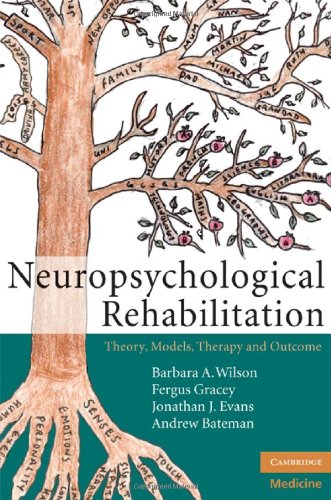
Neuropsychological Rehabilitation Theory Models Therapy and Outcome 1st Edition by Barbara A Wilson Obe, Fergus Gracey, Jonathan J Evans, Andrew Bateman ISBN 0521841496 9780521841498
Original price was: $50.00.$35.00Current price is: $35.00.
Neuropsychological Rehabilitation Theory Models Therapy and Outcome 1st Edition by Barbara A Wilson Obe, Fergus Gracey, Jonathan J Evans, Andrew Bateman – Ebook PDF Instant Download/Delivery: 0521841496, 9780521841498
Full download Neuropsychological Rehabilitation Theory Models Therapy and Outcome 1st Edition after payment
Product details:
ISBN 10: 0521841496
ISBN 13: 9780521841498
Author: Barbara A Wilson Obe, Fergus Gracey, Jonathan J Evans, Andrew Bateman
The aim of neuropsychological rehabilitation is to enable people with cognitive, emotional, or behavioural deficits to achieve their maximum potential in the domains of psychological, social, leisure, vocational or everyday functioning. Describing the holistic programme devised and adopted at the world famous Oliver Zangwill Centre and embracing a broad theoretical base, incorporating a variety of frameworks, theories and models, this book proposes an integrated approach to brain injury rehabilitation by an interdisciplinary team. The coverage explains the underlying principles involved, describes the group therapies employed, highlights a selection of real case examples and reviews the outcomes measured and achieved. This book is essential reading for clinical neuropsychologists, clinical psychologists, speech and language therapists, occupational therapists, psychiatrists, neurologists, physiotherapists, social workers and nurses.
Neuropsychological Rehabilitation Theory Models Therapy and Outcome 1st Table of contents:
Section 1: Background and theory
1 Towards a comprehensive model of neuropsychological rehabilitation
2 Evidence for the effectiveness of neuropsychological rehabilitation
3 Goal setting as a way of planning and evaluating neuropsychological rehabilitation
4 The Oliver Zangwill Centre approach to neuropsychological rehabilitation
Section 2: Group interventions
5 The Understanding Brain Injury (UBI) Group
6 The Cognitive Group, Part 1: Attention and Goal Management
7 The Cognitive Group, Part 2: Memory
8 The Mood Management Group
9 The Psychological Support Group
10 Working with families in neuropsychological rehabilitation
11 Communication Group
12 Practically based project groups
Section 3: Case illustrations
13 Peter: successful rehabilitation following a severe head injury with cerebrovascular complications
14 Lorna: applying models of language, calculation and learning within holistic rehabilitation: from dysphasia and dyscalculia to independent cooking and travel
15 Caroline: treating post-traumatic stress disorder after traumatic brain injury
16 Interdisciplinary vocational rehabilitation addressing pain, fatigue, anxiety and impulsivity: Yusuf and his ‘new rules for business and life’
17 Judith: learning to do things ‘at the drop of a hat’: behavioural experiments to explore and change the ‘meaning’ in meaningful functional activity
18 Simon: brain injury and the family – the inclusion of children, family members and wider systems in the rehabilitation process
19 Adam: extending the therapeutic milieu into the community in the rehabilitation of a client with severe aphasia and apraxia
20 Malcolm: coping with the effects of Balint’s syndrome and topographical disorientation
21 Kate: cognitive recovery and emotional adjustment in a young woman who was unresponsive for several months
Section 4: Outcomes
22 Is this approach effective? Outcome measurement at the Oliver Zangwill Centre
People also search for Neuropsychological Rehabilitation Theory Models Therapy and Outcome 1st:
neuropsychological rehabilitation theory models
neuropsychological rehabilitation theory models therapy and outcome pdf
what is the psychosocial rehabilitation model
what is neuropsychological rehabilitation
types of neuro rehabilitation
Tags: Barbara A Wilson Obe, Fergus Gracey, Jonathan J Evans, Andrew Bateman, Neuropsychological, Rehabilitation