

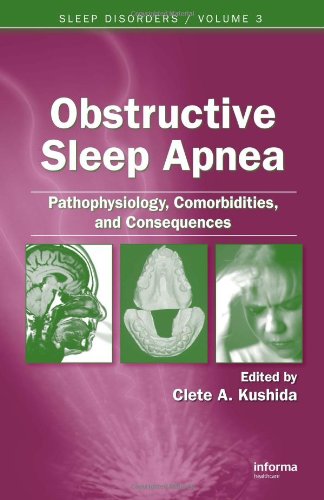
Obstructive Sleep Apnea Pathophysiology Comorbidities and Consequences Sleep Disorders 1st Edition by Clete Kushida 9781040200162 1040200168

Original price was: $50.00.$35.00Current price is: $35.00.
Obstructive Sleep Apnea Pathophysiology Comorbidities and Consequences Sleep Disorders 1st Edition by Clete Kushida – Ebook PDF Instant Download/Delivery: 9781040200162, 1040200168
Full download Obstructive Sleep Apnea Pathophysiology Comorbidities and Consequences Sleep Disorders 1st edition after payment
Product details:
ISBN 10: 1040200168
ISBN 13: 9781040200162
Author: Clete Kushida
Responding to the growing recognition of Obstructive Sleep Apnea (OSA) as a major medical condition and the emergence of exciting new therapies, this source analyzes the clinical features, characteristics, comorbidities, and impact of OSA on patient biological systems and quality-of-life. Edited by the Director of the Center for Human Sleep Researc
Obstructive Sleep Apnea Pathophysiology Comorbidities and Consequences Sleep Disorders 1st Table of contents:
1 Perspectives
References
Section I: Features, Factors, and Characteristics
2 History
- Pretwentieth Century Literature
- Burwell Et Al.’S Poker Player And The First Sleep Recordings Of Pickwickian Patients
- First Treatment Attempts
- Sleep Apnea In Thin Persons
- First Major International Conference Of Respiratory Sleep Disorders
- Sleep Apnea Over The Past Twenty-Five Years
- Sleep Apnea In Children
- Cornerstones Of Modern Treatment For Obstructive Sleep Apnea
- Conclusions
- References
3 Epidemiology
- Introduction
- Snoring
- Obstructive Sleep Apnea Prevalence
- Gender
- Menopause
- Pre-eclampsia
- Ethnicity
- Children
- New Directions
- Metabolic Syndrome
- Conclusions
- References
4 Ontogeny
- Introduction
- Infancy
- Childhood And Adolescence
- Adulthood And Old Age
- Clinical Manifestations
- Age Dependence
- Risk Factors for Osa During Adulthood
- Pathophysiology of Osa in Adults and the Elderly
- Outcomes and Comorbidities of Osa in Adults and the Elderly
- Conclusions
- References
5 Phylogeny and Animal Models: An Uninhibited Survey
- Introduction
- Terrestriality And Evolution Of The Pharynx
- Evolutionary Pressures Influence The Pharynx
- Walking, Talking, and Breathing: What Is the Problem?
- Changes in the Craniofacial Relationships
- Changes in the Maxilla
- Oropharyngeal Compression
- Language, Speech, And Brain Growth
- Altricial Brain Growth in Mammals
- Cerebral Control Over Pharynx
- Acquisition of Speech Predisposes to Obstructive Sleep Apnea
- Life History and Emergence of Obstructive Sleep Apnea
- Animal Models Of Obstructive Sleep Apnea
- Obesity and Bony Abnormalities
- Rhesus Monkey Model of Nasal Constriction
- Descent of Hyoid: Chimpanzees Mirror Human Ontogeny
- Conclusions
- References
6 Upper Airway Anatomy
- Introduction
- Anatomy Of The Upper Airway
- Overview
- Nose
- Anterior Nasal Cavity
- Posterior Nasal Cavity/Nasopharynx
- Mouth
- Anterior Oral Cavity and Tongue
- Posterior Oral Cavity/Oropharynx
- Pharynx
- Oropharynx: Retropalatal Region
- Oropharynx: Retroglossal Region
- Hypopharynx
- Larynx
- Conclusions
- References
7 Physiology and Dynamics of the Upper Airway
- Introduction
- Embryology
- Nonrespiratory Functions Of The Upper Airway
- Speech
- Swallowing
- Physiologic Functions Of Selected Regions Of The Upper Airway
- Physiology of the Nose
- Upper Airway Muscles
- Physiology of the Larynx
- Dynamics Of The Upper Airway During Sleep
- The Starling Resistor Model
- Measurements in the Static Upper Airway
- Limitations of Studies on Upper Airway Collapsibility
- Determinants of Upper Airway Neuromotor Tone
- Sleep State
- Ventilatory Drive
- Subatmospheric (Negative) Pressure
- Lung Volume
- Posture and Neck Position
- Gender
- Airway Length
- Upper Airway Sensation
- Development
- Upper Airway Collapsibility in Osa
- Conclusions
- References
8 Upper Airway Pathology
- Introduction
- Nasal Obstruction
- Choanal Atresia
- Laryngomalacia
- Tracheomalacia And Tracheal Stenosis
- Congenital Pharyngeal Stenosis
- Hurler’S And Hunter’S Syndromes
- Hurler’s Syndrome
- Hunter’s Syndrome
- Maxillary Hypoplasia
- Crouzon’s Syndrome
- Apert’s Syndrome
- Pfeiffer’s Syndrome
- Antley-Bixler’s Syndrome
- Stickler’s Syndrome
- Down Syndrome
- Cleft Palate Repair
- Mandibular Hypoplasia
- Pierre Robin Syndrome
- Treacher Collins Syndrome
- Goldenhar’s Syndrome
- Tongue Enlargement
- Beckwith-Wiedeman Syndrome
- Conclusions
- References
9 Control of Breathing in Sleep
- Introduction
- Hallmarks Of Sleep Apnea
- Changes In The Control Of Breathing In Sleep
- Reduced Respiratory Motor Output
- Sleep Unmasks a Highly Sensitive Apneic Threshold
- Importance of Reflex Inputs—Reduced Gain of Chemoreflexes
- Concept of Loop Gain (See Also Chapter 11)
- The Co2 Reserve and Apnea
- The Co2 Reserve Is Labile
- Which Chemoreceptors Are Responsible for Apnea?
- Reduced Gain of Mechanoreflexes
- Alterations in Cerebral Blood Flow and Vascular Responsiveness
- The Special Problem Of Rem Sleep
- Skeletal Muscle Atonia
- Excitation of Central Rhythm Generator
- Sleep Effects On Ventilatory Control And Sleep Apnea In Special Circumstances
- Obstructive Sleep Apnea
- Neurodegenerative Disease
- Congestive Heart Failure
- Hypoxia
- Elderly
- Conclusions
- Acknowledgments
- References
10 Arousal from Sleep
- Introduction
- What Is A Micro-Arousal And How Is It Related To The Course Of Sleep?
- The Concept Of Cortical And Subcortical (Autonomic) Arousal
- Arousals Preceded By Synchronization (Slow Waves, K-Complexes) Eeg Changes
- Influence Of Sensory Stimulation On The Formation Of Both Types Of Arousals
- State-Specific Reactivity In Sleep
- Hierarchy Of Arousals—The Concept Of A Continuum
- Pathologic Arousals, With Special Emphasis On Sleep-Related Breathing Disorders
- Arousals Gating Pathological Events
- Functions Of Arousal During Sleep
- Conclusions
- Acknowledgment
- References
11 Pathogenesis
- Introduction
- Anatomy (See Also Chapter 6) Function
- Structure
- Upper Airway Lumen
- Upper Airway Soft Tissue
- Other Anatomical Factors
- Upper Airway Shape
- Upper Airway Length
- Nasal Obstruction
- Upper Airway Collapse
- Sites of Collapse
- Collapsibility in Obstructive Sleep Apnea
- Mechanisms
- Balance of Forces
- Neuromuscular Compensation
- Background
- Awake
- The Effect of Sleep
- Theory Of Upper Airway Collapse
- Newer Theories Of Upper Airway Collapse (Fig. 2)
- Lung Volume
- Ventilatory Control Instability
- Respiratory Drive and Upper Airway Patency
- Loop Gain
- Loop Gain in Obstructive Sleep Apnea
- Co2 Reserve and Loop Gain
- Neuromuscular Compensation During Sleep
- Arousal Threshold
- Motor and Sensory Deficits
- Other Mechanisms
- Neurotransmitters And Sleep (Fig. 5)
- Conclusions
- References
12 Risk Factors
- Introduction
- Obesity (See Also Chapter 20)
- Weight Gain and Obstructive Sleep Apnea
- Weight Loss and Obstructive Sleep Apnea
- Effect of Obesity on Obstructive Sleep Apnea
- Fat Distribution
- Neck Circumference
- Summary on Obesity and Obstructive Sleep Apnea
- Craniofacial Features (See Also Chapter 8)
- Upper Airway Soft Tissues and Skeletal Features
- Soft Tissues of the Pharynx
- Nose
- Gender
- Weight and Gender
- Upper Airway Mechanics and Gender
- Control of Breathing and Gender
- Menopause
- Ethnicity
- Age (See Also Chapter 4)
- Smoking
- Alcohol
- Specific Diseases
- Polycystic Ovarian Syndrome
- Stroke
- Other Neurologic Conditions
- Snoring
- Body Position
- Conclusions
- References
13 Familial and Genetic Factors
- Introduction
- Intermediate Phenotypes
- Obesity (See Also Chapter 20)
- Craniofacial Structure (See Also Chapter 12)
- Ventilatory Control (See Also Chapters 7 and 9)
- Disorders That Affect Sleep And Breathing
- Sudden Infant Death Syndrome
- Congenital Central Alveolar Hypoventilation Syndrome
- Prader-Willi Syndrome
- Other Congenital Syndromes
- Obstructive
People also search for Obstructive Sleep Apnea Pathophysiology Comorbidities and Consequences Sleep Disorders 1st:
fda approved obstructive sleep apnea
mild obstructive sleep apnea
eli lilly obstructive sleep apnea
obstructive sleep apnea symptoms
obstructive sleep apnea icd 10
Tags:
Obstructive,Sleep Apnea,Clete Kushida