

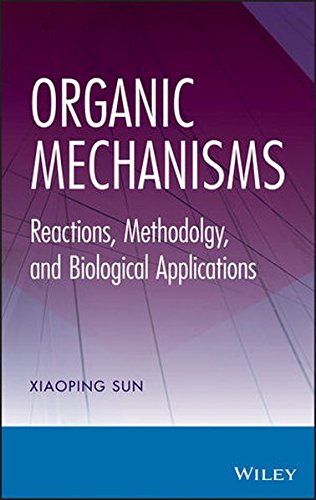
Organic mechanisms reactions methodology and biological applications 1st Edition by Xiaoping Sun ISBN 1118065646 9781118065648
Original price was: $50.00.$35.00Current price is: $35.00.
Organic mechanisms reactions methodology and biological applications 1st Edition by Xiaoping Sun – Ebook PDF Instant Download/Delivery: 1118065646, 9781118065648
Full download Organic mechanisms reactions methodology and biological applications 1st Edition after payment
Product details:
ISBN 10: 1118065646
ISBN 13: 9781118065648
Author: Xiaoping Sun
Table of contents:
Chapter 1: Fundamental Principles
1.1 Reaction mechanisms and their importance
1.2 Elementary (concerted) and stepwise reactions
1.3 Molecularity
1.4 Kinetics
1.5 Thermodynamics
1.6 The transition state
1.7 The molecular orbital theory
1.8 Electrophiles/nucleophiles versus acids/bases
1.9 Isotope labeling
References
Problems
Chapter 2: The Aliphatic C-H Bond Functionalization
2.1 Alkyl radicals: Bonding and their relative stability
2.2 Radical halogenations of the C-H bonds on sp3-hybridized carbons: Mechanism and nature of the transition states
2.3 Energetics of the radical halogenations of alkanes and their regioselectivity
2.4 Kinetics of radical halogenations of alkanes
2.5 Radical initiators
2.6 Transition-metal-compounds catalyzed alkane C-H bond activation and functionalization
2.7 Superacids catalyzed alkane C-H bond activation and functionalization
2.8 Nitration of aliphatic C-H bonds via the nitronium NO2+ ion
2.9 Enzyme catalyzed alkane C-H bond activation and functionalization: Biochemical methods
References
Problems
Chapter 3: Functionalization of the Alkene C=C Bond by Electrophilic Additions
3.1 Markovnikov additions via intermediate carbocations
3.2 Electrophilic addition of hydrogen halides to conjugated dienes
3.3 Non-Markovnikov radical addition
3.4 Hydroboration: Concerted, Non-Markovnikov syn-addition
3.5 Transition-metal catalyzed hydrogenation of the alkene C=C bond (syn-addition)
3.6 Halogenation of the alkene C=C bond (Anti-addition): Mechanism and its stereochemistry
References
Problems
Chapter 4: Functionalization of the Alkene C=C Bond by Cycloaddition Reactions
4.1 Cycloadditions of the alkene C=C bond to form three-membered rings
4.2 Cycloadditions to form four-membered rings
4.3 Diels-Alder cycloadditions of the alkene C=C bond to form six-membered rings
4.4 1,3-Dipolar cycloadditions of the C=C and other multiple bonds to form five-membered rings
4.5 Pericyclic reactions
References
Problems
Chapter 5: The Aromatic C-H Bond Functionalization and Related Reactions
5.1 Aromatic nitration: All reaction intermediates and full mechanism for the aromatic C-H bond substitution by nitronium (NO2+) and related electrophiles
5.2 Mechanisms and synthetic utility for aromatic C-H bond substitutions by other related electrophiles
5.3 The electrophilic aromatic C-H bond substitution reactions via SN1 and SN2 mechanisms
5.4 Substituent effects on the electrophilic aromatic substitution reactions
5.5 Isomerizations effected by the electrophilic aromatic substitution reactions
5.6 Electrophilic substitution reactions on the aromatic carbon-metal bonds: Mechanisms and synthetic applications
5.7 Nucleophilic aromatic substitution via a benzyne (aryne) intermediate: Functional group transformations on aromatic rings
5.8 Nucleophilic aromatic substitution via an anionic Meisenheimer complex
5.9 Biological applications of functionalized aromatic compounds
References
Problems
Chapter 6: Nucleophilic Substitutions on sp3-Hybridized Carbons: Functional Group Transformations
6.1 Nucleophilic substitution on mono-functionalized sp3-hybridized carbon
6.2 Functional groups which are good and poor leaving groups
6.3 Good and poor nucleophiles
6.4 SN2 reactions: Kinetics, mechanism, and stereochemistry
6.5 Analysis of the SN2 mechanism using symmetry rules and molecular orbital theory
6.6 SN1 reactions: Kinetics, mechanism, and product development
6.7 Competitions between SN1 and SN2 reactions
6.8 Some useful SN1 and SN2 reactions: Mechanisms and synthetic perspectives
6.9 Biological applications of nucleophilic substitution reactions
References
Problems
Chapter 7: Eliminations
7.1 E2 Elimination: Bimolecular β-elimination of H/LG and its regiochemistry and stereochemistry
7.2 Analysis of the E2 mechanism using symmetry rules and molecular orbital theory
7.3 Basicity versus nucleophilicity for various anions
7.4 Competition of E2 and SN2 reactions
7.5 E1 Elimination: Stepwise β-elimination of H/LG via an intermediate carbocation and its rate-law
7.6 Special β-elimination reactions
7.7 Elimination of LG1/LG2 in the compounds that contain two functional groups
7.8 α-Elimination giving a carbene: A mechanistic analysis using symmetry rules and molecular orbital theory
7.9 E1cb elimination and its biological applications
References
Problems
Chapter 8: Nucleophilic Additions and Substitutions on Carbonyl Groups
8.1 Nucleophilic additions and substitutions of carbonyl compounds
8.2 Nucleophilic additions of aldehydes and ketones and their biological applications
8.3 Biological hydride donors NAD(P)H and FADH2
8.4 Activation of carboxylic acids via nucleophilic substitutions on the carbonyl carbons
8.5 Nucleophilic substitutions of acyl derivatives and their biological applications
8.6 Reduction of acyl derivatives by hydride donors
8.7 Kinetics of the Nucleophilic addition and substitution of acyl derivatives
References
Problems
Chapter 9: Reactivity of the α-Hydrogen to Carbonyl Groups
9.1 Formation of enolates and their nucleophilicity
9.2 Alkylation of carbonyl compounds (aldehydes, ketones, and esters) via enolates and hydrazones
9.3 Aldol reactions
9.4 Acylation reactions of esters via enolates: Mechanism and synthetic utility
9.5 Roles of enolates in metabolic processes in living organisms
References
Problems
Chapter 10: Rearrangements
10.1 Major types of rearrangements
10.2 Rearrangement of carbocations: 1,2-Shift
10.3 Neighboring leaving group facilitated 1,2-rearrangement
10.4 Carbene rearrangement: 1,2-Rearrangement of hydrogen facilitated by a lone pair of electrons
10.5 Claisen rearrangement
10.6 Photochemical isomerization of alkenes and its biological applications
10.7 Rearrangement of carbon-nitrogen-sulfur containing heterocycles
References
Problems
People also search for:
organic mechanisms reactions methodology and biological applications
organic reaction mechanism books
organic reaction mechanisms
organic chemistry reaction mechanisms pdf
organic mechanisms
Tags: Xiaoping Sun, Organic, Mechanisms, Reactions, Methodology, Biological, Applications