

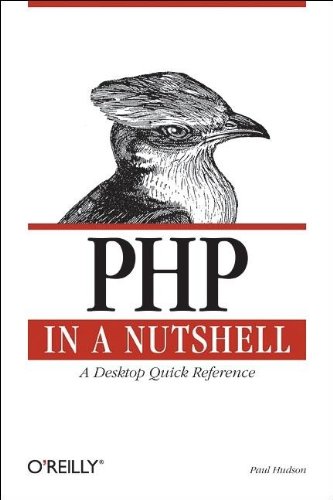
PHP in a Nutshell A Desktop Quick Reference 1st Edition by Paul Hudson 9780596518653 059651865X


Original price was: $50.00.$35.00Current price is: $35.00.
PHP in a Nutshell A Desktop Quick Reference 1st Edition Paul Hudson – Ebook PDF Instant Download/Delivery:
Full download PHP in a Nutshell A Desktop Quick Reference 1st Edition after payment
Product details:
ISBN 10: 059651865X
ISBN 13: 9780596518653
Author: Paul Hudson
Now installed on more than 20 million Internet domains around the world, PHP is an undisputed leader in web programming languages. Database connectivity, powerful extensions, and rich object-orientation are all reasons for its popularity, but nearly everyone would agree that, above all, PHP is one of the easiest languages to learn and use for developing dynamic web applications. The ease of development and simplicity of PHP, combined with a large community and expansive repository of open source PHP libraries, make it a favorite of web designers and developers worldwide. PHP in a Nutshell is a complete reference to the core of the language as well as the most popular PHP extensions. This book doesn’t try to compete with or replace the widely available online documentation. Instead, it is designed to provide depth and breadth that can’t be found elsewhere. PHP in a Nutshell provides the maximum information density on PHP, without all the fluff and extras that get in the way. The topic grouping, tips, and examples in this book complement the online guide and make this an essential reference for every PHP programmer. This book focuses on the functions commonly used by a majority of developers, so you can look up the information you need quickly. Topics include: Object-oriented PHP Networking String manipulation Working with files Database interaction XML Multimedia creation Mathematics Whether you’re just getting started or have years of experience in PHP development, PHP in a Nutshell is a valuable addition to your desk library.
PHP in a Nutshell A Desktop Quick Reference 1st Table of contents:
Conventions Used in This Book
Using Code Examples
Safari® Enabled
How to Contact Us
Acknowledgments
Introduction to PHP
PHP History
Advantages of PHP
The HTML Relationship
Interpreting Versus Compiling
Output Control
Performance
Getting Help
The Documentation
Mailing Lists
IRC
Conferences
User Groups
Submitting a Bug
Getting Certified
PHP Resources
Books
Magazines
Web Sites
Installing PHP
Installing on Windows
Installing Apache
Installing Microsoft IIS
Configuring Extensions
Installing on Unix
Installing Using Packages
Compiling from Source
Configuring Extensions
Testing Your Configuration
System Configuration
The PHP Interpreter
Running PHP Scripts
Extending PHP
PEAR
Abnormal Script Termination
The PHP Language
The Basics of PHP
Variables
Whitespace
Heredoc
Brief Introduction to Variable Types
Code Blocks
Opening and Closing Code Islands
Comments
Conditional Statements
Case Switching
Loops
Infinite Loops
Special Loop Keywords
Loops Within Loops
Mixed-Mode Processing
Including Other Files
Functions
A Simple User Function
Return Values
Parameters
Passing By Reference
Returning by Reference
Default Parameters
Variable Parameter Counts
Variable Scope in Functions
Overriding Scope with the GLOBALS Array
Recursive Functions
Variables and Constants
Types of Data
True or False
Strings
Escape Sequences
Integers
Floats
Automatic Type Conversion
Checking Whether a Variable Is Set: isset( )
Variable Scope
Variable Variables
Superglobals
Using $_ENV and $_SERVER
References
Constants
Preset Constants
Mathematical Constants
Arrays
First Steps
Associative Arrays
The Array Operator
Returning Arrays from Functions
Array-Specific Functions
array_diff( )
array_filter( )
array_flip( )
array_intersect( )
array_keys( )
array_merge( )
array_pop( )
array_push( )
array_rand( )
array_shift( )
array_unique( )
array_unshift( )
array_values( )
arsort( )
asort( )
explode( )
extract( )
implode( )
in_array( )
krsort( )
ksort( )
range( )
shuffle( )
Multidimensional Arrays
The Array Cursor
Holes in Arrays
Using Arrays in Strings
Saving Arrays
Operators
Arithmetic Operators
Assignment Operators
String Operators
Bitwise Operators
Comparison Operators
Incrementing and Decrementing Operators
Logical Operators
Some Operator Examples
The Ternary Operator
The Execution Operator
Operator Precedence and Associativity
Function Reference
Undocumented Functions
Handling Non-English Characters
abs( )
acos( )
addslashes( )
asin( )
atan( )
base_convert( )
bindec( )
call_user_func( )
call_user_func_array( )
ceil( )
chr( )
connection_status( )
cos( )
count_chars( )
date( )
decbin( )
dechex( )
decoct( )
deg2rad( )
die( )
dl( )
empty( )
escapeshellcmd( )
eval( )
exec( )
exit( )
floor( )
function_exists( )
get_extension_funcs( )
get_loaded_extensions( )
hexdec( )
html_entities( )
html_entity_decode( )
ignore_user_abort( )
ini_get( )
ini_set( )
is_callable( )
isset( )
ltrim( )
md5( )
microtime( )
mktime( )
mt_rand( )
nl2br( )
number_format( )
octdec( )
ord( )
parse_str( )
passthru( )
pow( )
printf( )
rad2deg( )
rand( )
rawurldecode( )
rawurlencode( )
register_shutdown_function( )
round( )
rtrim( )
set_time_limit( )
sha1( )
sin( )
sleep( )
sqrt( )
str_pad( )
str_replace( )
str_word_count( )
strcasecmp( )
strcmp( )
strip_tags( )
stripslashes( )
strlen( )
strpos( )
strstr( )
strtolower( )
strtotime( )
strtoupper( )
substr( )
tan( )
time( )
trim( )
ucfirst( )
ucwords( )
unset( )
usleep( )
virtual( )
wordwrap( )
Object-Oriented PHP
Conceptual Overview
Classes
Defining a Class
How to Design Your Class
Basic Inheritance
Overriding Methods
The Scope Resolution Operator
Objects
Properties
The ‘this’ Variable
Objects Within Objects
Access Control Modifiers
Public
Private
Protected
Final
Abstract
Iterating Through Object Properties
Object Type Information
Class Type Hints
Constructors and Destructors
Parent Constructors
Destructors
Deleting Objects
Copying Objects
Comparing Objects with == and ===
Saving Objects
Magic Methods
_ _autoload( )
_ _get( )
_ _set( )
_ _call( )
_ _toString( )
Static Class Methods and Properties
Helpful Utility Functions
Interfaces
Dereferencing Object Return Values
HTML Forms
What Does It Mean to Be Dynamic?
Designing a Form
GET and POST
Available Elements
A Working Form
Handling Data
register_globals
Working Around register_globals
Magic Quotes
Handling Our Form
Splitting Forms Across Pages
Validating Input
Form Design
Summary
Cookies and Sessions
Cookies Versus Sessions
Using Cookies
Using Sessions
Starting a Session
Adding Session Data
Reading Session Data
Removing Session Data
Ending a Session
Checking Session Data
Files Versus Databases
Storing Complex Data Types
Output Buffering
Why Use Output Buffering?
Getting Started
Reusing Buffers
Stacking Buffers
Flushing Stacked Buffers
Reading Buffers
Other OB Functions
Flushing Output
Compressing Output
URL Rewriting
Security
Security Tips
Put Key Files Outside Your Document Root
Remember That Most Files Are Public
Hide Your Identity
Hiding PHP
Encryption
Encrypting Data
Symmetric Decryption
Files
Reading Files
readfile( )
file_get_contents( ) and file( )
fopen( ) and fread( )
Reading by line using fgets( )
Creating and Changing Files
file_put_contents( )
fwrite( )
Moving, Copying, and Deleting Files
Moving Files with rename( )
Copying Files with copy( )
Deleting Files with unlink( )
Other File Functions
Checking Whether a File Exists
Retrieving File Time Information
Dissecting Filename Information
Handling File Uploads
Checking Uploaded Files
Locking Files with flock( )
Reading File Permissions and Status
Changing File Permissions and Ownership
Working with Links
Working with Directories
Creating Directories
Deleting Directories
Reading and Changing the Working Directory
One Last Directory Function
Remote Files
File Checksums
Parsing a Configuration File
Databases
Using MySQL with PHP
Connecting to a MySQL Database
Querying and Formatting
Disconnecting from a MySQL Database
Reading in Data
Mixing in PHP Variables
Reading Auto-Incrementing Values
Unbuffered Queries for Large Data Sets
PEAR::DB
Quick PEAR::DB Calls
Query Information
Advanced PEAR::DB: Prepared Statements
SQLite
Before You Begin
Getting Started
Advanced Functions
Mixing SQLite and PHP
Persistent Connections
MySQL Improved
Regular Expressions
Basic Regexps with preg_match( ) and preg_match_all( )
Regexp Character Classes
Regexp Special Characters
Words and Whitespace Regexps
Storing Matched Strings
Regular Expression Replacements
Regular Expression Syntax Examples
The Regular Expressions Coach
Manipulating Images
Getting Started
Choosing a Format
Getting Arty
More Shapes
Complex Shapes
Outputting Text
Loading Existing Images
Color and Image Fills
Adding Transparency
Using Brushes
Basic Image Copying
Scaling and Rotating
Points and Lines
Special Effects Using imagefilter( )
Interlacing an Image
Getting an Image’s MIME Type
Creating PDFs
Getting Started
Adding More Pages and More Style
Adding Images
PDF Special Effects
Adding Document Data
Creating Flash
A Simple Movie
Flash Text
Actions
Animation
XML & XSLT
SimpleXML
XML Attributes
Reading from a String
Searching and Filtering with XPath
Outputting XML
Transforming XML Using XSLT
An Example XSL Document
Adding PHP to the Mix
Network Programming
Sockets
Sockets Are Files
Creating a Server
HTTP
Sending Custom Headers
Reading Queued Headers
Authentication Over HTTP
Sending Mail
MIME Types
Easier Mail Sending with PEAR::Mail
Sending Mixed-Type Messages with PEAR::Mail_Mime
Sending Real Attachments
Curl
Installing Curl
Your First Curl Script
Trapping Return Values
Using FTP to Send Data
Sending Data Over HTTP
The Abridged List of Curl Options
Debugging Curl
Distributing Your Code
Cross-Platform Code 1: Loading Extensions
Cross-Platform Code 2: Using Extensions
Cross-Platform Code 3: Path and Line Separators
Cross-Platform Code 4: Coping with php.ini Differences
Cross-Platform Code 5: Checking the PHP Version with phpversion( ) and version_compare( )
Debugging
The Most Basic Debugging Technique
Making Assertions
Triggering Your Own Errors
Testing with php_check_syntax( )
Source Highlighting
Handling MySQL Errors
Exception Handling
Backtracing Your Code
Custom Error Handlers
Custom Exception Handlers
Using @ to Disable Errors
phpinfo( )
Output Style
Installing Tidy
Performance
Write Your Code Sensibly
Use the Zend Optimizer
Use a PHP Code Cache
Compress Your Output
Don’t Use CGI
Debug Your Code
Use Persistent Connections
Compile Right
Index
People also search for PHP in a Nutshell A Desktop Quick Reference 1st :
php in a nutshell
php quickbooks desktop
php quick reference pdf
php in a nutshell pdf
Tags:
Nutshell Desktop,Quick Reference,Paul Hudson