

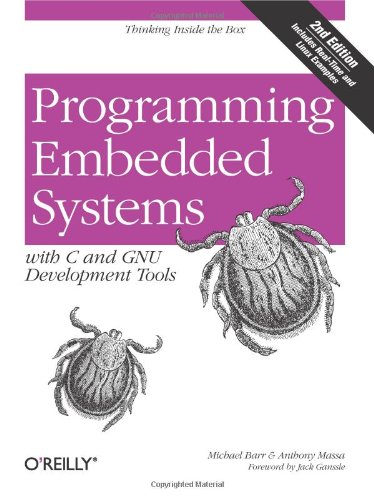
Programming embedded systems with C and GNU development tools 2nd Edition by Michael Barr, Anthony Massa 9780596553289 0596553285


Original price was: $50.00.$35.00Current price is: $35.00.
Programming embedded systems with C and GNU development tools 2nd Edition by Michael Barr, Anthony Massa – Ebook PDF Instant Download/Delivery:9780596553289, 0596553285
Full download Programming embedded systems with C and GNU development tools 2nd Edition after payment
Product details:
ISBN 10: 0596553285
ISBN 13: 9780596553289
Author: Michael Barr; Anthony J Massa
If you have programming experience and a familiarity with C–the dominant language in embedded systems–Programming Embedded Systems, Second Edition is exactly what you need to get started with embedded software. This software is ubiquitous, hidden away inside our watches, DVD players, mobile phones, anti-lock brakes, and even a few toasters. The military uses embedded software to guide missiles, detect enemy aircraft, and pilot UAVs. Communication satellites, deep-space probes, and many medical instruments would have been nearly impossible to create without embedded software. The first edition of Programming Embedded Systems taught the subject to tens of thousands ofpeople around the world and is now considered the bible of embedded programming. This second edition has been updated to cover all the latest hardware designs and development methodologies. The techniques and code examples presented here are directly applicable to real-world embedded software projects of all sorts. Examples use the free GNU software programming tools, the eCos and Linux operating systems, and a low-cost hardware platform specially developed for this book. If you obtain these tools along withProgramming Embedded Systems, Second Edition, you’ll have a full environment for exploring embedded systems in depth. But even if you work with different hardware and software, the principles covered in this bookapply. Whether you are new to embedded systems or have done embedded work before, you’ll benefit from the topics in this book, which include: How building and loading programs differ from desktop or servercomputers Basic debugging techniques–a critical skill when working withminimally endowed embedded systems Handling different types of memory Interrupts, and the monitoring and control of on-chip and externalperipherals Determining whether you have real-time requirements, and whetheryour operating system and application can meet those requirements Task synchronization with real-time operating systems and embeddedLinux Optimizing embedded software for size, speed, and power consumption Working examples for eCos and embedded Linux So whether you’re writing your first embedded program, designing thelatest generation of hand-held whatchamacalits, or managing the peoplewho do, this book is for you. Programming EmbeddedSystems will help you develop the knowledge and skills youneed to achieve proficiency with embedded software. Praise for the first edition:”This lively and readable book is the perfect introduction for those venturing into embedded systems software development for the first time. It provides in one place all the important topics necessary to orient programmers to the embedded development process.
Programming embedded systems with C and GNU development tools 2nd Table of contents:
CHAPTER 1: Introduction
What Is an Embedded System?
-
History and Future
-
Real-Time Systems
-
Figure 1-1. A range of example real-time systems
-
Variations on a Theme
-
Common System Components
-
Figure 1-2. A generic embedded system
-
Figure 1-3. (a) Basic embedded software diagram and (b) a more complex embedded software diagram
-
Requirements That Affect Design Choices
-
Table 1-1. Common design requirements for embedded systems
Embedded Design Examples
-
Digital Watch
-
Video Game Player
-
Mars Rover
Life As an Embedded Software Developer
-
The C Language: The Lowest Common Denominator
-
Other Embedded Languages
-
Choosing a Language for the Book
-
Consistent Coding Practices
-
A Few Words About Hardware
-
Fixed Width Integers: Sometimes Size Matters
-
Figure 1-4. The Arcom VIPER-Lite development boards
CHAPTER 2: Getting to Know the Hardware
Understanding the Big Picture
-
Figure 2-1. Block diagram for the print server
Hardware Basics
-
Figure 2-2. Block diagram for the print server on Arcom board
Schematic Fundamentals
-
Figure 2-3. Basic schematic symbols
-
Figure 2-4. Example schematic
Examine the Landscape
-
Memory Map
-
Figure 2-5. Example timing diagram
-
Figure 2-6. Memory map for the Arcom board
Learn How to Communicate
-
Getting to Know the Processor
-
Processors in General
-
The PXA255 XScale Processor
-
Study the External Peripherals
-
Initialize the Hardware
-
Figure 2-7. The hardware and software initialization process
CHAPTER 3: Your First Embedded Program
Hello, World!
The Blinking LED Program
-
Figure 3-1. Arcom board add-on module containing the green LED
-
The ledInit Function
-
Table 3-1. PXA255 GPIO registers
-
Figure 3-2. PXA255 processor GPDR0 register
-
I/O Space Register Access
-
The ledToggle Function
-
The delay_ms Function
-
The Role of the Infinite Loop
CHAPTER 4: Compiling, Linking, and Locating
The Build Process
-
Figure 4-1. The embedded software development process
-
Figure 4-2. The split between host and target
Compiling, Linking, and Locating
-
Compiling
-
Linking
-
Startup Code
-
Locating
-
Debug Monitors
Building the Blinking LED Program
-
Figure 4-3. Compiling the Blinking LED program
-
Figure 4-4. Linking and locating the Blinking LED program
CHAPTER 5: Downloading and Debugging
-
Debug Monitors
-
RedBoot
-
Downloading with RedBoot
-
Running Programs with RedBoot
-
Debugging on the Arcom Board
-
Remote Debuggers
-
Figure 5-2. Components of a remote debug session
-
Emulators, Simulators, and Hardware Tools
CHAPTER 6: Memory
-
Types of Memory
-
Figure 6-1. Common memory types in embedded systems
-
Endian Issues
-
Memory Testing
-
Using Flash Memory
CHAPTER 7: Peripherals
-
Control and Status Registers
-
Bit Manipulation
-
The Device Driver Philosophy
-
A Serial Device Driver
CHAPTER 8: Interrupts
-
Overview
-
Figure 8-1. Interrupt wiring
-
Interrupt Service Routine
-
Shared Data and Race Conditions
-
Timers and Watchdog Timers
CHAPTER 9: Putting It All Together
-
Application Overview
-
Working with Serial Ports
-
Command-Line Interface Processing
CHAPTER 10: Operating Systems
-
The Scheduler
-
Task States and Priorities
-
Task Synchronization
-
Real-Time Characteristics
CHAPTER 11: eCos Examples
CHAPTER 12: Embedded Linux Examples
CHAPTER 13: Extending Functionality
CHAPTER 14: Optimization Techniques
People also search for Programming embedded systems with C and GNU development tools 2nd :
the art of programming embedded systems
cs 4220 programming embedded systems
c programming embedded systems pdf
the art of programming embedded systems pdf
object oriented programming embedded systems
Tags:
Michael Barr,Anthony Mas,Programming embedded