

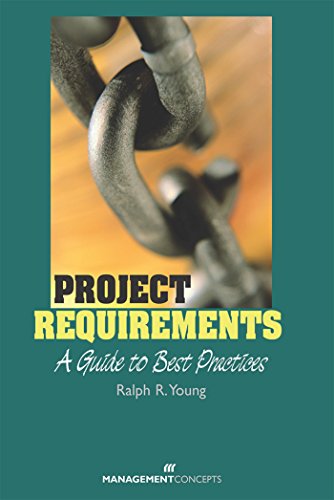
Project Requirements A Guide to Best Practices 1st Edition by Ralph Young 9781523096282 1523096284


Original price was: $50.00.$35.00Current price is: $35.00.
Project Requirements A Guide to Best Practices 1st Edition by Ralph Young – Ebook PDF Instant Download/Delivery:
9781523096282, 1523096284
Full download Project Requirements A Guide to Best Practices 1st Edition after payment
Product details:
ISBN 10: 1523096284
ISBN 13: 9781523096282
Author: Ralph Young
Project Requirements: A Guide to Best Practices gives project managers tools they can assimilate and apply easily to improve project success rates, reduce development costs, reduce rework, and accelerate time to market. Based on experience and best practices, this valuable reference will help you:
• Clarify real requirements before you initiate project work
• Improve management of project requirements
• Save time and effort
• Manage to your schedule
• Improve the quality of deliverables
• Increase customer satisfaction and drive repeat business
Project Requirements: A Guide to Best Practices provides project managers with a direct, practical strategy to overcome requirements challenges and manage requirements successfully.
Project Requirements A Guide to Best Practices 1st Table of contents:
Chapter 1. Introduction
How the PM Will Benefit By Paying Attention to Requirements
What Are Requirements and Why Are They Important?
Why Pay Attention to Requirements?
Why This Book?
Requirements Activities in the Project Life Cycle
Requirements-Shaping PM Practices
Setting Expectations Concerning the Requirements
Goals of This Book
Chapter 2. Key Requirements Success Factors
Criteria for a Good Requirement
Types of Requirements
Need for High-Level Requirements
Key Success Factors
Engage all Project Roles in the Requirements Process
Write a Project Vision and Scope Document
Identify a Set of High-Level Requirements
Use Trained and Experienced Requirements Analysts
Evolve the “Real” Requirements
Use Mechanisms to Manage Changes to Requirements and New Requirements
Develop and Use a Requirements Plan
Document and Invest in the Project’s Requirements Process
Take Proactive Steps to Address the Most Frequent Types of Requirements Errors
Understand the Real Requirements before Initiating Other Technical Work
Involve the Project’s Customers and Users
Plan for Change
The Experience of Being a User in a Requirements Process
Chapter 3. Partnering for Success
Costs and Benefits of Partnering
Securing the Commitment of Stakeholders
The Partnering Process
The Decision to Partner
Evolving Mutual Expectations
Initial Partnering Workshop
Mutual Support in Ongoing Project Efforts
Chapter 4. Requirements-Related Project Startup Issues
Typical Requirements-Related Project Startup Issues
Confusion Reigns
Project Requirements Are Not Clear
A Set of High-Level Requirements Is Not Identified
All Requirements Are Considered Equal
The Team Is under Pressure to Start the “Real Work”
Requirements Are Not Clarified before Other Technical Work Is Initiated
All Stakeholders Are Not Identified
Effective Communication among Project Participants Is Lacking
Customer Places Too Much Burden for Defining Requirements on the Developers
Users Believe the New System Will Address All Their Perceived Needs
Requirements Process Is Not Documented
Project Staff Are Asked to Use Automated Tools without Training
Suggested Remedies for Typical Requirements-Related Project Startup Issues
Identify a Champion for the Project Requirements Process
Hire and Train Experienced Requirements Analysts
Write a Project Vision and Scope Document
Form and Use a Joint Team
Provide an Initial Project Requirements Briefing
Design, Document, and Use the Project’s Requirements Process
Identify the Real Requirements
Provide Ongoing Training for the Requirements Analysts
Select, Deploy, Implement, and Use Industry-Proven Effective Requirements Practices
Engage All Project Staff in the Requirements Process
Create a Project Configuration Control Board
Undertake Team Building among the Project Staff
Take Steps to Make Effective Use of an Automated Requirements Tool
Requirements-Related Startup Checklist
Chapter 5. Fostering Effective Teamwork
The Need for Effective Teamwork Concerning Requirements Tasks
Fostering Effective Teamwork
Customer and User Involvement in Requirements Activities
The Joint Team
Identifying the Real Requirements
Controlling New Requirements and Changes to Requirements
Using a Requirements Working Group
Addressing Verification and Validation during Requirements Development
Chapter 6. Coaching the Project’s Requirements Manager and Requirements Analyst
The PM as Coach
Coaching Opportunities to Support the Roles of the RA
Role 1: Work Collaboratively to Identify the Real Requirements
Role 2: Work Effectively with Customers and Users to Manage New and Changed Requirements
Role 3: Be Alert to New Technologies
Role 4: Facilitate the Project in Reusing Artifacts and Achieving Repeatability
Role 5: Assist in Envisioning a Growth Path to the Ultimate System
Role 6: Advise the Project on Methods, Techniques, and Automated tools Available to Support Requirements-Related Work
Role 7: Use Metrics to Measure, Track, and Control Requirements-Related Project Work
Role 8: Facilitate Discussions and Mediate Conflicts
Role 9: Study the Domain of the Area in Which the System Is Used
Be Willing to Be Coached!
Chapter 7. Clear Communication: The Key to Project Success
How Communication Affects Requirements Activities
Foster and Encourage Open Communication
Empower Your Team Members
Recognize the Efforts of Your Team Members
Convene a Project CCB
Hold Effective Meetings
Establish Rules of Conduct
Ensure Mutual Accountability
Advocate for Effective Use of E-mail
Chapter 8. Being Agile: The “Right” Amount of Discipline and Process
Why Processes Help
What Discipline Is Needed?
Where to Start
What Amount of Process Should Be Provided on a Project?
Chapter 9. Continuous Improvement
What Is Continuous Improvement?
Why Pursue Continuous Improvement?
Establishing an Environment of Continuous Improvement
Identify the Business Objectives and Communicate Why They Are Important
Set Goals and Milestones for the Project Based on Stakeholder Needs and Expectations
Emphasize That Every Member of the Project Team Is Valued
Welcome Opportunities for Improvement
Create an Environment of Constructive Information Sharing
Provide Practical Mechanisms for Identifying and Addressing Barriers
Take Time to Assess Results
Respond to Suggestions Made by the Project Team
Chapter 10. The Project Manager’s Role Concerning Quality
Setting Quality Goals
The QA Role on a Project
Role 1: Become One of the Sources of Process Knowledge
Role 2: Develop and Maintain an Environment of Continuous Improvement
Role 3: Don’t Audit; Instead, Teach and Coach
Maintaining a Quality Culture on a Project
Using Quality Improvement Tools and Techniques
Chapter 11. Requirements, Risk, and the Project Manager
Why Use Risk Management?
Risk Management Planning
Risk Identification
Brainstorming
Taxonomy-based Questionnaire
Lessons Learned Analysis
Risk Assessment
Risk Response Planning
Risk Monitoring and Control
Chapter 12. Summary and Suggested Implementation Steps
Suggested Implementation Steps
Summary of Requirements-related Mechanisms
Summary of Other Key Concepts
Fostering Senior Management Commitment
Epilogue
People also search for Project Requirements A Guide to Best Practices 1st:
eagle scout project requirements
which organization publishes standards for project requirements
who is responsible for establishing project requirements
the characteristics of project requirements are also called
principal project requirements
Tags:
Project Requirements,Best Practices,Ralph Young