

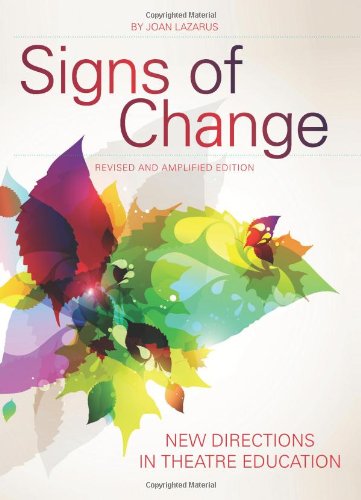
Signs of Change New Directions in Theatre Education 1st edition by Joan Lazarus ISBN 184150629X 978-1841506296

Original price was: $50.00.$35.00Current price is: $35.00.
Signs of Change New Directions in Theatre Education 1st edition by Joan Lazarus – Ebook PDF Instant Download/Delivery: 184150629X, 978-1841506296
Full download Signs of Change New Directions in Theatre Education 1st edition after payment
Product details:
ISBN 10: 184150629X
ISBN 13: 978-1841506296
Author: Joan Lazarus
There is no one-size-fits-all way to keep pace with the changes affecting students and those who educate them. That’s why Joan Lazarus has gathered here the insights of hundreds of theater teachers and teaching artists on how they have responded to the shifting demands of theater education in today’s schools. She paints a portrait of active, dynamic professionals who build vibrant programs and confront challenges in a variety of ways—from inclusive, interactive lessons to comprehensive programs that address the impact of poverty, race, gender, and spirituality on students’ lives. In the process, she shows how real teachers bring about real change. An accessible and up-to-date guide to best practices in theater education, this expanded and revised edition encompasses new hands-on activities—drawn from the author’s in-depth interviews and research.
Signs of Change New Directions in Theatre Education 1st Table of contents:
Chapter 1: Signs of Change and the Need for Change
Change
Change and Education
A Different Future for Theatre Education?
Why Change Now?
Best Practice
Best Practice in Theatre Education
So What’s New?
New Directions
Clarifying Terms
The Pioneer’s Journey
Voices from the Field – What Does Best Practice Look Like? – Various
A Closer Look – Best Practice in Action – Mandy Whitlock
Ideas for Further Reflection
Selected Resources
Notes
Chapter 2: Learner-Centered Practice
Learner-Centered Practice in a Theatre Program
Teacher-Student Relationships
Participation in a Learner-Centered Program
Dialogue, Decision Making, and Reflection
Organization and Classroom Management in a Learner-Centered Environment
Drama and Learner-Centered Practice
Differentiating Instruction in a Learner-Centered Theatre Program
Learner-Centered Practice in Productions
Balancing Art and Education
Directing Young Performers Versus Adult Performers
Process-Centered and Product-Centered Intersections
Artistic Standards in a Learner-Centered Program
Critical Response to Student Work
Intersections Between Classroom Work and Productions
Devising and Producing Student Works
Time Investment
Voices from the Field – Learner-Centered Practices
Embracing Digital Media in a Learner-Centered Program – Amy Jensen
Shared Decision Making – Brendan Kelley
Asking Questions Is an Awfu Lot Easier – Rebecca JaUings
When Surprising Things Happen – Vaerie Labonski
We Do Not Produce High School Theatre – Dave and Donna Barnes
A Closer Look – Learner-Centered Classes and Productions
Director or Dictator? – Frank Chuter
A Place for Everyone – Eleshia Crotwell
Making Connections Is Not Always Easy – Bobby Malone
Examples of Learner-Centered Lessons and Rehearsal Ideas
The Spot – Bill Hansen
Moment Analysis – A Learner-Centered Approach to Directing – Brian Hall
Ideas for Further Reflection
Selected Resources
Notes
Chapter 3: Socially Responsible Practice
What Is Socially Responsible Theatre Education?
A Pattern of Awareness and Action
Self-Reflection and Socially Responsible Practice
Whose Program Is This? Theatre and Individual Differences
Theatre, Poverty, and Social Class
Theatre, Ability, and Disability
Theatre, Race, and Privilege
Theatre, Language, and Culture
Theatre and English Language Learners
Theatre and Gender
Theatre and Sexual Orientation
Theatre, Religion, and Spirituality
Theatre and Age Appropriate Practice
Making Connections to Students’ Lived Experiences
Building a Safe Learning Community
A Culture of Caring
Building Relationships within the Program
Socially Responsible Interactions with Students
Theatre as a Catalyst for Dialogue: Connections to the Community Outside of the School
Choosing Socially Responsible Material to Teach and Produce
Finding Time to Look for Scripts
Challenges to Socially Responsible Theatre Practice
At What Cost? Taking Care of Yourself as Best Practice
Voices from the Field – Socially Responsible Practices
Strangers in a Strange Land – Luis Munoz
Recognizing Spirituality in a High School Theatre Program – Jo Beth Gonzaez
Theatre in the Middle: Big Enough for Everyone – Betsy Quinn
Theatre Teachers as Teacher Leaders – Laura McCammon
A Parent’s Perspective – Justine Johnson
A Closer Look – Socially Responsible Classes and Productions
No Limits – Renee Norris
Reaching the “Unreachable” – Bridgid Thomas
Breaking the Cycle for “Unreachable” Students – Roxanne Schroeder-Arce
Establishing a Sociafly Responsibe Cassroom – Betsy Quinn
Socialy Engaged Practice – Julia Peñowski
Examples of Socially Responsible Lessons and Productions
Conflict with Authority – Steve Bogart
Drama with English Language Learners – Richard Siberg
Devising Socialy Engaged Performances – Jenny Lutringer
Ideas for Further Reflection
Selected Resources
Notes
Chapter 4: Comprehensive Theatre Education
Discipline-Based Theatre Education: A Framework for Learning
Interdisciplinary Arts Education
Arts Integration
Successfully Collaborating with Colleagues
An Example of Comprehensive Theatre Education
Drama-Based Interdisciplinary Unit – Deb Aexander
Ideas for Further Reflection
Selected Resources
Notes
Chapter 5: Theatre Education Outside the Box
Community Based Theatre Education
Albany Park Theatre Project
Peope’s Light and Theatre
Fulton You theatre
Flint Youth Theatre
Creative Arts Team
Imagination Stage
Teaching Artists and Artists in Residence
Voices from the Field – Community Based Theatre Education
Creative Spaces: Arts Integration with a Social Justice Focus – Ginian McNally
A Teaching Artist’s Reflections – Susan diRende
An Example of Theatre Education Outside the Box Empowering Ophelia – GMan McNafly
Ideas for Further Reflection
Selected Resources
Note
Chapter 6: Breaking the Mold: Best Practice in Theatre Teacher Education
Rethinking Theatre Teacher Education: What Could Be
New Directions in Theatre Teacher Education
The Relationship Between Lifelong Learning and Best Practice
Challenges to Change in Theatre Teacher Education
Voices from the Field – New Directions in Theatre Teacher Education
The Heart of a Teacher – Laura McCammon
Methods for Teaching Theatre: Preparation through CoZaborative Partnerships – Jennifer Chapman
Breaking the Cyde in Teacher Education – Roxanne Schroeder-Arce
Ideas for Further Reflection
Selected Resources
Note
Chapter 7: On the Frontier of Change: Visions for the Field
A Wider View of Change
Parker Pamer
Ben Cameron
Maxine Greene
David O’Fallon
Voices from the Field
Teachers, Change Makers, and Pioneers on the Verge of Change
Works Cited
People also search for Signs of Change New Directions in Theatre Education 1st:
signs of change new directions in theatre education
change in direction sign meaning
stage directions symbols
what is the importance of stage directions in a play
broadway theatre sign