

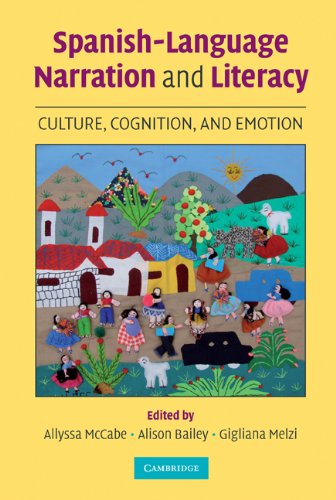
Spanish Language Narration and Literacy Culture Cognition and Emotion 1st Edition by Allyssa Mccabe,Alison L Bailey,Gigliana Melzi ISBN 052188375X 9780521883757


Original price was: $50.00.$35.00Current price is: $35.00.
Spanish Language Narration and Literacy Culture Cognition and Emotion 1st Edition by Allyssa McCabe, Alison L. Bailey, Gigliana Melzi – Ebook PDF Instant Download/Delivery: 052188375X, 9780521883757
Full download Spanish Language Narration and Literacy Culture Cognition and Emotion 1st Edition after payment
Product details:
ISBN 10: 052188375X
ISBN 13: 9780521883757
Author: Allyssa McCabe, Alison L. Bailey, Gigliana Melzi
This book is divided into three main topical sections: (1) Parent-child construction of narrative, which focuses on aspects of the social interaction that facilitate oral narrative development in Spanish-speaking children; (2) Developing independent narration by Spanish-speaking children; and (3) Narrative links between Latino children’s oral narration and their emergent literacy and other school achievements. Chapters address narration to and by Latino children aged six months to eleven years old and in low, middle, and upper socioeconomic groups. Nationalities of speakers include the following: Costa Rican, Dominican, Ecuadorian, Mexican, Peruvian, Puerto Rican, Venezuelan, and Spanish-English bilingual children who are citizens or residents of the United States. Narratives studied include those in conversations, personal and fictional stories, and those prompted by wordless picture books or videos. Thus, the current project includes diverse nationalities, socioeconomic backgrounds, and genres of narrative.
- Study of multiple populations of Spanish-speaking children in the Americas
- Examination of various types of narration in Spanish
- Consideration of Spanish-speakers at home (mothers, fathers and children) and at school
Table of contents:
1. Introduction Alison Bailey, Allyssa McCabe and Gigliana Melzi
Part I. Parent-Child Interaction:
2. Cultural variations in mother-child narrative discourse style Margaret Caspe and Gigliana Melzi
3. Early socio-communicative narrative patterns during Costa Rican mother-infant interaction Pablo Stansbery
4. Lessons in mother-child and father-child personal narratives in Latino families Tonia N. Cristofaro and Catherine S. Tamis-LeMonda
5. Evaluation in Spanish-speaking mother-child narratives: the social and sense-making function of internal state references Camila Fernández and Gigliana Melzi
6. Love, diminutives, and gender socialization in Andean mother-child narrative conversations Kendall A. King and Colleen Gallagher
Part II. Developing Independent Narration:
7. The intersection of language and culture among Mexican-heritage children three to seven years old Alison Wishard Guerra
8. Beyond chronicity: evaluation and temporality in Spanish-speaking children’s personal narratives Paola Uccelli
9. Narrative stance in Venezuelan children’s stories Martha Shiro
10. Mestizaje: Afro-Caribbean and indigenous Costa Rican children’s narratives and links with other traditions C. Nicholas Cuneo, Allyssa McCab, and Gigliana Melzi
Part III. Links to Literacy and Other School Achievements:
11. Latino mothers and their preschool children talk about the past Alison Sparks
12. The contribution of Spanish-language narration to the assessment of early academic performance of Latino students Alison L. Bailey, Ani Moughamian and Mary Dingle
13. Cultural variation in narrative competence and its implications for children’s academic success Sarah W. Beck.
People also search for:
spanish language narration and literacy culture cognition
spanish literacy curriculum
spanish literacy meaning
spanish language norms
spanish native language arts curriculum guide
Tags: Allyssa Mccabe, Alison L Bailey, Gigliana Melzi, Spanish Language, Narration, Literacy, Culture, Cognition, Emotion