

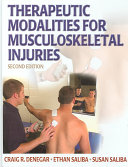
Therapeutic Modalities for Musculoskeletal Injuries Athletic Training Education 2nd Edition by Craig R Denegar, Ethan Saliba, Susan Foreman Saliba ISBN 0736055827 9780736055826

Original price was: $50.00.$35.00Current price is: $35.00.
Therapeutic Modalities for Musculoskeletal Injuries Athletic Training Education 2nd Edition by Craig R. Denegar, Ethan Saliba, Susan Foreman Saliba – Ebook PDF Instant Download/Delivery: 0736055827, 9780736055826
Full download Therapeutic Modalities for Musculoskeletal Injuries Athletic Training Education 2nd Edition after payment
Product details:
ISBN 10: 0736055827
ISBN 13:9780736055826
Author: Craig R. Denegar, Ethan Saliba, Susan Foreman Saliba
Therapeutic Modalities for Musculoskeletal Injuries, Second Edition, is an introductory text to the theory and application of therapeutic modalities in the rehabilitation of athletic injuries. Like its predecessor, Therapeutic Modalities for Athletic Injuries, the text provides a clear perspective of the physics and physiological responses to the modalities discussed, and the new edition also prepares readers for the challenges arising in the ever-changing health care system.
Part of Human Kinetics’ Athletic Training Education Series, this text has been revised and updated to present current research related to therapeutic modalities. Additional insight from two experts also helps to expand the content of this second edition and encourage more diverse thinking among students. New chapters have been added on the use of therapeutic laser treatment and the basic concepts of evidence-based practice.
Therapeutic Modalities for Musculoskeletal Injuries, Second Edition, goes beyond the how of modality application to ask why and when. Specific treatment for individual problems is not prescribed, but reference is made to specific guidelines, summary papers, and research papers. The text prepares students to search this type of literature and apply the information, so as clinicians they can seek evidence to find the optimal treatment strategy and support the clinical decisions they make.
Human Kinetics’ Athletic Training Education Series contains five textbooks, each with its own supporting instructional resources. Featuring the work of respected athletic training authorities, the series was created to parallel and expound on the content areas established by the National Athletic Trainers’ Association (NATA) Educational Council. Therapeutic Modalities for Musculoskeletal Injuries, Second Edition, addresses the following NATA content areas: Therapeutic Modalities and Psychosocial Intervention and Referral.
Table of contents:
1. The Contemporary Use of Therapeutic Modalities
1.1 Legal Aspects of Therapeutic Modality Application: Practice Acts and Negligent Treatment
1.2 The Rehabilitation Plan of Care
1.3 Learning Aids
2. Psychological Aspects of Rehabilitation
2.1 Psychological Response to Injury
2.2 Maximizing Compliance With a Rehabilitation Plan of Care
2.3 Barriers to Successful Rehabilitation
2.4 Clinical Outcomes and Efficacy of Therapeutic Modalities
2.5 A Word About Placebo
2.6 Learning Aids
3. Tissue Injury, Inflammation, and Repair
3.1 Healing Tissues and Inflammation: An Overview
3.2 Acute Phase of the Inflammatory Response
3.3 Repair Phase of the Inflammatory Response
3.4 Maturation Phase of the Inflammatory Response
3.5 Chronic Inflammation
3.6 Swelling
3.7 Learning Aids
4. Pain and Pain Relief
4.1 What Is Pain?
4.2 Pain and the Physical Exam
4.3 Pain Assessment
4.4 Transmission of the Pain Sensation
4.5 Pain Control Theories
4.6 Learning Aids
5. Persistent Pain and Chronic Pain
5.1 Sources of Persistent Pain
5.2 Sources of Chronic Pain
5.3 Learning Aids
6. Impact of Injury and Pain on Neuromuscular Control
6.1 Integration of Components of Neuromuscular Control Into a Rehabilitation Plan of Care
6.2 Why Is Neuromuscular Control Lost?
6.3 The Role of Therapeutic Modalities in Restoring Neuromuscular Control
6.4 Learning Aids
7. Evidence-Based Application of Therapeutic Modalities
7.1 The Need for Evidence-Based Practice
7.2 Tools Necessary for Assessing Outcomes
7.3 Finding and Assessing the Evidence
7.4 Learning Aids
8. Cold and Superficial Heat
8.1 Energy Transfer
8.2 Cryotherapy and Cryokinetics
8.3 Superficial Heat
8.4 Heat and Cold: Contrast Therapy
8.5 Heat, Cold, and Contrast Therapy: Deciding What to Apply
8.6 Learning Aids
9. Principles of Electrotherapy
9.1 Basics of Electricity
9.2 Types of Electrical Current: Alternating, Direct, and Pulsatile
9.3 Parameters of Electrical Stimulation
9.4 Electrode Considerations
9.5 Learning Aids
10. Clinical Uses of Electrical Stimulation
10.1 Pain Relief: Transcutaneous Electrical Nerve Stimulation
10.2 Muscle Reeducation: Neuromuscular Electrical Stimulators
10.3 Iontophoresis and Stimulation of Denervated Muscle: Direct Current Stimulator
10.4 Wound Healing: Microcurrent Electrical Nerve Stimulator
10.5 Learning Aids
11. Ultrasound, Diathermy, and Electromagnetic Fields
11.1 Application of Acoustic Energy: Ultrasound
11.2 Efficacy of Ultrasound Therapy for Musculoskeletal Conditions
11.3 Application of Electromagnetic Energy: Diathermy and Pulsed Electromagnetic Fields
11.4 Efficacy of Diathermy and PEMF Therapy
11.5 Stimulation of Fracture Healing
11.6 Learning Aids
12. Low-Level Laser Therapy
12.1 Electromagnetic Energy
12.2 Laser Production
12.3 Properties of Laser Light
12.4 Laser Classification
12.5 Laser Parameter Selection
12.6 Comparing Low-Level Laser Therapy Treatments
12.7 Biological Effects of Laser
12.8 Safety Considerations
12.9 Contraindications and Precautions
12.10 Learning Aids
13. Mechanical Energy
13.1 Manual Therapies
13.2 Is Manual Therapy Effective?
13.3 Traction
13.4 Intermittent Compression
13.5 Traction and Intermittent Compression: Effective Therapies?
13.6 Learning Aids
14. Treatment Plans for Acute Musculoskeletal Injuries
14.1 Management in the Acute Stage: Rest, Ice, Compression, Elevation
14.2 Modalities Used in Addition to RICE
14.3 Repair Phase
14.4 Maturation
14.5 Learning Aids
15. Neuromuscular Control and Biofeedback
15.1 Volitional Control and Biofeedback
15.2 Clinical Applications: Restoring Control of Volitional Contraction
15.3 Clinical Applications: Functional Progression
15.4 Learning Relaxation
15.5 Learning Aids
16. Clinical Management of Persistent Pain
16.1 Treating Persistent Pain
16.2 Diagnosis and Plan of Care Problems
16.3 Treating Chronic Pain
16.4 Learning Aids
Glossary
Index
People also search for:
what is a musculoskeletal injury
occupational therapy musculoskeletal disorders
musculoskeletal modalities
musculoskeletal therapy agents
therapeutic modalities for musculoskeletal injuries 4th edition pdf
what is a musculoskeletal injuries
musculoskeletal therapeutic area
therapeutic exercise for musculoskeletal injuries free pdf
therapeutic modalities in sports medicine
Tags: Craig R Denegar, Ethan Saliba, Susan Foreman Saliba, Therapeutic Modalities, Musculoskeletal Injuries, Athletic Training Education