

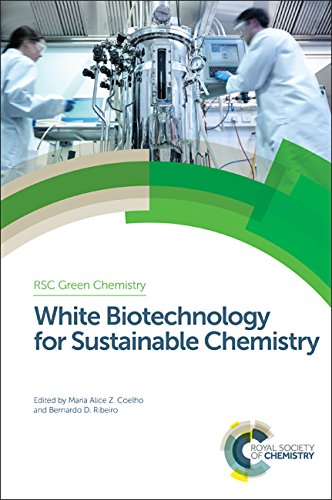
White biotechnology for sustainable chemistry 1st Edition by Maria Alice Coelho, Bernardo D Ribeiro, James H Clark ISBN 1849738165 9781849738163
Original price was: $50.00.$35.00Current price is: $35.00.
White biotechnology for sustainable chemistry 1st Edition by Maria Alice Coelho, Bernardo D Ribeiro, James H Clark – Ebook PDF Instant Download/Delivery: 1849738165, 9781849738163
Full download White biotechnology for sustainable chemistry 1st Edition after payment
Product details:
ISBN 10: 1849738165
ISBN 13: 9781849738163
Author: Maria Alice Coelho, Bernardo D Ribeiro, James H Clark
White biotechnology is the use of enzymes and microorganisms in industrial production through applied biocatalysis. This allows for milder reaction conditions (pH and temperature) and the use of more environmentally-compatible catalysts and solvents. This, in turn, leads to processes which are shorter, generate less waste, making them both environmentally and economically more attractive than conventional routes.
This book describes the use of white biotechnology within the sustainable chemistry concept, covering waste minimization; the use of alternative solvents (supercritical fluids, pressurized gases, ionic liquids and micellar systems) and energies (microwaves and ultrasound); sustainable approaches for the production of fine and bulk chemicals (aromas, polymers, pharmaceuticals and enzymes); the use of renewable resources and agro-industrial residues; and biocatalysts recycling.
Covering industrial processes and new technologies, this book combines expertise from academia and industry. It is a valuable resource for researchers and industrialists working in biotechnology, green chemistry and sustainability.
White biotechnology for sustainable chemistry 1st Table of contents:
Chapter 1: Principles of Green Chemistry and White Biotechnology
Authors: Bernardo Dias Ribeiro, Maria Alice Z. Coelho, Aline Machado de Castro
-
1.1 Green Chemistry: Could Chemistry be Greener?
-
1.2 White Biotechnology
-
1.3 Concluding Remarks
-
References
Chapter 2: Sustainability, Green Chemistry and White Biotechnology
Author: Roger A. Sheldon
-
2.1 Introduction to Green Chemistry and Sustainability
-
2.2 Green Chemistry Metrics
-
2.3 Environmental Impact and Sustainability Metrics
-
2.4 The Role of Catalysis in Waste Minimisation
-
2.5 Solvents and Multiphase Catalysis
-
2.6 Green Chemistry and White Biotechnology
-
2.7 Green and Sustainability Metrics of White Biotechnology
-
2.7.1 Fermentation Processes
-
2.7.2 Enzymatic Production of an Atorvastatin Intermediate
-
2.7.3 Enzymatic Synthesis of Sitagliptin
-
2.7.4 Enzymatic Production of Myristyl Myristate
-
-
2.8 White Biotechnology, Green Chemistry and the Utilisation of Waste Biomass
-
2.9 Conclusions & Future Prospects
-
References
Chapter 3: Biocatalysis in Organic Media
Author: A. Illanes
-
3.1 Enzyme Structure and Function
-
3.2 Enzymes and Biocatalysts
-
3.3 Enzyme Catalysis in Aqueous Media
-
3.4 Enzyme Biocatalysis in Non-Aqueous (Non-Conventional) Media
-
3.4.1 Gases
-
3.4.2 Supercritical Fluids
-
3.4.3 Ionic Liquids
-
3.4.4 Semisolid Systems
-
3.4.5 Reactions Conducted at Very High Substrate Concentration
-
-
3.5 Enzyme Biocatalysis in Organic Solvents
-
3.6 Enzymes as Catalysts for Organic Synthesis
-
3.7 Conclusions
-
References
Chapter 4: Microwave Assisted Enzyme Catalysis: Practice and Perspective
Authors: Ganapati D. Yadav, Saravanan Devendran
-
4.1 Introduction
-
4.2 Enzyme Catalysis
-
4.3 Microwave Irradiation
-
4.3.1 Brief History of Microwave Technology
-
4.3.2 Microwave Principles
-
4.3.3 Interaction Between Microwave Irradiation and Reaction Medium
-
4.3.4 Microwave Heating vs. Conventional Heating
-
4.3.5 Application of Microwaves in Enzymatic Reactions – Green Chemistry Approach
-
-
4.4 Application to Different Industrially Relevant Reactions
Chapter 5: Biocatalysis in Ionic Liquids
Authors: Debora de Oliveira, Isabel M. Marrucho, Isabel Belo
-
5.1 Introduction
-
5.2 Properties of Ionic Liquids
-
5.3 Enzyme Stability and Activity in Ionic Liquids
-
5.4 Applications in Biocatalysis
-
5.5 Conclusions
-
References
Chapter 6: Biocatalysis in Supercritical Fluids
Authors: Priscilla Amaral, Alessandro Simas
-
6.1 Introduction
-
6.2 Properties of Supercritical Fluids
-
6.3 Enzyme Stability and Activity in Supercritical Fluids
-
6.4 Applications in Biocatalysis
-
6.5 Conclusions
-
References
Chapter 7: Biocatalysis in Biphasic Systems
Authors: Anita Marsaioli, S. Shoda
-
7.1 Introduction
-
7.2 Types of Biphasic Systems
-
7.3 Enzyme Stability and Activity in Biphasic Systems
-
7.4 Applications in Biocatalysis
-
7.5 Conclusions
-
References
Chapter 8: Biocatalysis in Microemulsions
Authors: G. S. Santos, M. G. Freire
-
8.1 Introduction
-
8.2 Properties of Microemulsions
-
8.3 Enzyme Stability and Activity in Microemulsions
-
8.4 Applications in Biocatalysis
-
8.5 Conclusions
-
References
Chapter 9: Biocatalysis in Deep Eutectic Solvents
Authors: L. P. Silva, J. A. P. Coutinho
-
9.1 Introduction
-
9.2 Properties of Deep Eutectic Solvents
-
9.3 Enzyme Stability and Activity in Deep Eutectic Solvents
-
9.4 Applications in Biocatalysis
-
9.5 Conclusions
-
References
Chapter 10: Biocatalysis in Aqueous Two-Phase Systems
Authors: M. A. Z. Coelho, B. D. Ribeiro
-
10.1 Introduction
-
10.2 Properties of Aqueous Two-Phase Systems
-
10.3 Enzyme Stability and Activity in Aqueous Two-Phase Systems
-
10.4 Applications in Biocatalysis
-
10.5 Conclusions
-
References
Chapter 11: White Biotechnology for Polymer Production
Authors: Maria Alice Z. Coelho, Bernardo D. Ribeiro
-
11.1 Introduction – Production of Polymers via Conventional Chemical Processes
-
11.2 Monomer Production by White Biotechnology
-
11.2.1 Microbial Production of Monomers
-
11.2.2 Monomer Synthesis by Enzymatic Degradation of Naturally Occurring Polymers
-
11.2.3 Enzymatic Conversion of Vinyl Monomers
-
-
11.3 Polymer Production by White Biotechnology
-
11.3.1 General Aspects
-
11.3.2 Polymer Production by Microorganisms
-
-
11.4 Conclusions
-
References
Chapter 12: Production of Aroma Compounds via White Biotechnology
Authors: Maria Alice Z. Coelho, Bernardo D. Ribeiro
-
12.1 Introduction
-
12.2 Methods for Producing Aroma Compounds
-
12.3 Why Use White Biotechnology to Produce Aroma Compounds?
-
12.4 Examples of Aroma Compounds Produced Through White Biotechnology
-
12.4.1 Background and Overview: Processes, Advantages and Developments
-
12.4.2 Products Obtained—An Industrial Perspective
-
12.4.3 Production of Aroma Compounds in Bioreactors
-
-
12.5 Green Chemistry in the Production of Aroma Compounds
-
12.5.1 Alternative Solvents
-
-
12.6 Conclusions
-
References
Chapter 13: Biocatalysis for Pharmaceutical Production
Authors: Maria Alice Z. Coelho, Bernardo D. Ribeiro
-
13.1 Introduction
-
13.2 Enzymatic Synthesis of Pharmaceuticals
-
13.3 Case Studies
-
13.4 Conclusions
-
References
Chapter 14: Industrial Implementation of White Biotechnology
Authors: Maria Alice Z. Coelho, Bernardo D. Ribeiro
-
14.1 The Potential of White Biotechnology for the Production of Bulk Chemicals
-
14.2 Setup of a Development Project
-
14.2.1 The Three Typical Main Business Drivers in Large Scale Bioproduction
-
14.2.2 The Three Typical Main Parameters for Reducing the Cost of Production
-
14.2.3 Alignment with Business Drivers
-
-
14.3 Strain Development
-
14.3.1 Search for Natural Producers
-
-
14.4 Conclusions
-
References
Chapter 15: Trends and Perspectives in Green Chemistry and White Biotechnology
Authors: Bernardo Dias Ribeiro, Maria Alice Z. Coelho
-
15.1 Introduction
-
15.2 Emerging Trends
-
15.3 Future Perspectives
-
References
People also search for White biotechnology for sustainable chemistry 1st:
white biotechnology for sustainable chemistry
white biotech
white biotechnology definition
white biotechnology jobs
biotechnology white house